
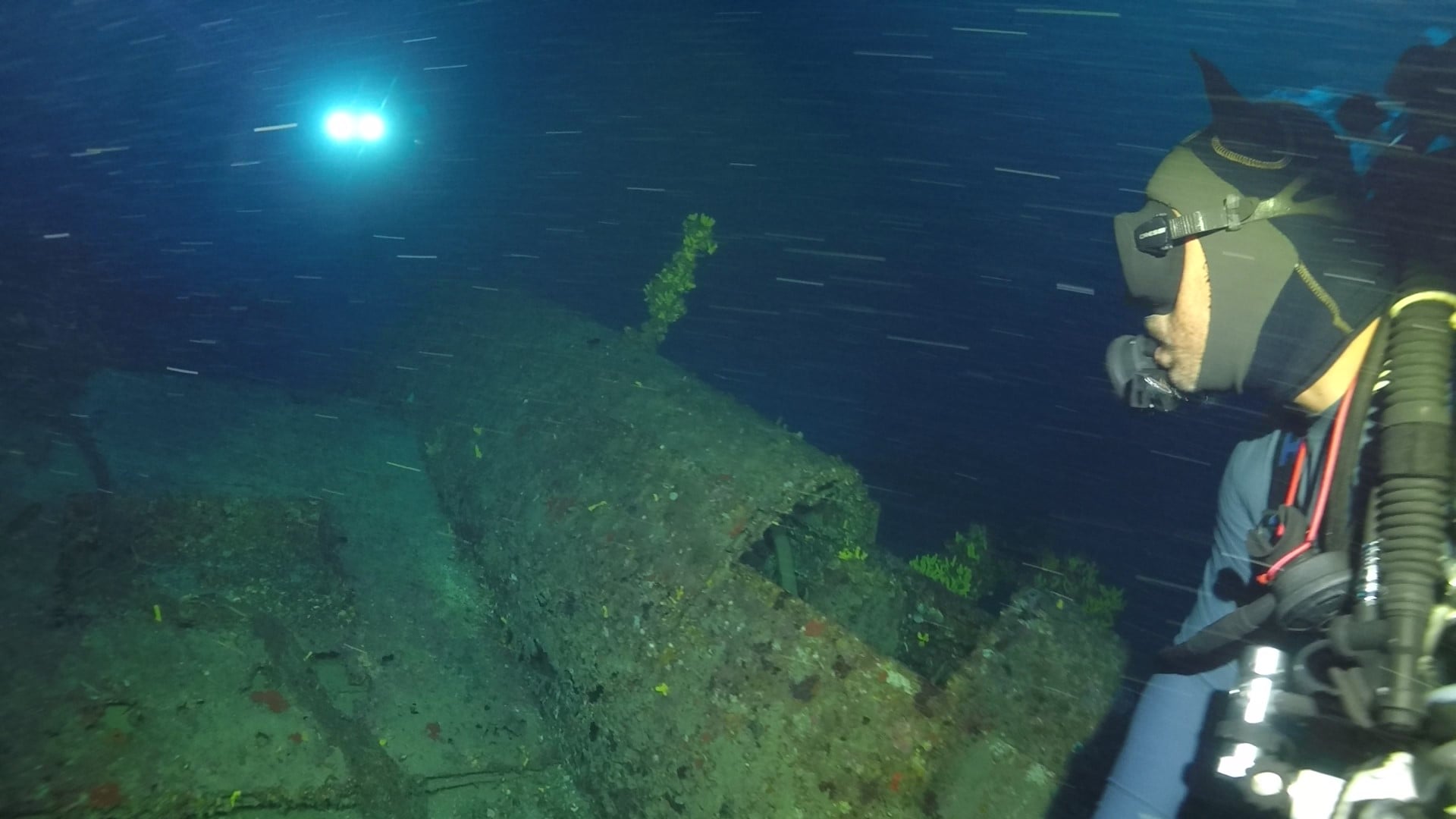
The Last Flight of Beaufighter KV930, shot Down over Ithaca: The Story of Lt. Ronald Geater, F/O Stanley Dellow and the Greeks Who Saved Them
Aircraft wrecks, Photo gallery, WW2, WW2 in Greece, WW2 WrecksDedication
Dedicated to the courageous people of Ithaca who, during the German occupation, risked their own lives to help Allied airmen in their struggle for freedom.
Story: Karelas George
Research in situ and diving: Gerasimos Sotiropoulos
The loss of Bristol Beaufighter KV930 on 12 September 1944 was only one incident among thousands of Allied air operations over occupied Europe. Yet the events that followed transformed the loss of one aircraft into an extraordinary story of courage, endurance and humanity.
After their aircraft was struck by German anti-aircraft fire during an attack on enemy shipping, Lieutenant Ronald Arthur Geater and Flying Officer Stanley William George Dellow succeeded in ditching their Beaufighter off the coast of Ithaca. Their survival depended not only on their own determination but also on the bravery of the Greek civilians and members of the resistance who sheltered them despite the constant threat of German reprisals.

One airman eventually escaped and returned to his squadron; the other spent the remainder of the war in captivity. Their experiences illustrate the dangers faced by Allied aircrews operating over occupied Greece during the final year of the Second World War and highlight the often-overlooked contribution of the inhabitants of the Ionian Islands to the Allied war effort.
This work reconstructs those events from wartime operational records, personal accounts, official reports and modern historical research. It also follows the later discovery of the wreck of KV930 beneath the waters off Ithaca, where it remains as a silent witness to one dramatic episode in the island’s wartime history.
The purpose of this article is not only to record the loss of an aircraft but also to honor the courage of the two airmen and the people of Ithaca who chose compassion over fear during one of history’s darkest periods.

The Last Flight of Bristol Beaufighter KV930
Shot Down off Ithaca – 12 September 1944
On the afternoon of 12 September 1944, a Bristol Beaufighter of No. 19 Squadron, South African Air Force (SAAF), serial KV930, failed to return to its base at Biferno, on Italy’s Adriatic coast. During an attack on German shipping in the waters north of the Greek island of Ithaca, the aircraft was struck by intense anti-aircraft fire. Its pilot, Lieutenant Ronald Arthur Geater, managed to keep the badly damaged aircraft under control long enough to carry out a successful ditching in the sea, saving both himself and his observer, Flying Officer Stanley William George Dellow. What followed was an extraordinary story of survival, courage, and sacrifice involving not only the two airmen but also the people of occupied Ithaca, who risked their own lives to shelter Allied servicemen from German forces.
The loss of KV930 occurred during the closing months of the Second World War, when the eastern Mediterranean remained a contested theatre despite the Allied advance through Italy and southern Europe. Although German forces had withdrawn from much of mainland Greece, they continued to hold strategically important islands in the Aegean and Ionian Seas. These garrisons depended almost entirely on coastal shipping for supplies, ammunition, and reinforcements. Disrupting this maritime lifeline became a major objective of the Allied air forces operating from southern Italy.
Among the units assigned to this task was No. 19 Squadron SAAF, equipped with the heavily armed Bristol Beaufighter Mk VI. Flying long-range anti-shipping patrols across the Adriatic and Ionian Seas, the squadron attacked German cargo vessels, landing craft, ferries, and armed coastal convoys. These missions were among the most hazardous undertaken by Allied aircrews. To achieve maximum accuracy, Beaufighters had to attack at very low altitude, exposing themselves to concentrated anti-aircraft fire from ships and coastal batteries. Even a successful attack often came at a heavy cost.
KV930’s final mission was one such operation. While attacking a German Siebel ferry near Ithaca, the aircraft was hit in its starboard engine by accurate enemy fire. Lieutenant Geater immediately realized that returning to Italy was impossible. Demonstrating exceptional skill, he brought the aircraft down onto the sea, allowing both crew members to escape before it disappeared beneath the surface. Their ordeal, however, was only beginning.
Hidden by local inhabitants and members of the Greek resistance, the two airmen attempted to return to Allied territory. During an evacuation by fishing boat, German patrols intercepted the party. Geater escaped by swimming ashore under cover of darkness and eventually succeeded in returning to his squadron. Dellow, unable to swim, was captured and spent the remainder of the war as a prisoner in Stalag Luft III. Their contrasting experiences illustrate both the dangers faced by Allied airmen operating over occupied Greece and the courage of the civilians who risked severe punishment to help them.
Today, the wreck of KV930 rests on the seabed off the coast of Ithaca. Rediscovered decades after the war, it serves as a tangible reminder of one of the many air operations carried out over the Ionian Sea in 1944. Yet the story of KV930 is more than the account of a lost aircraft. It is also the story of two young airmen, of ordinary Greek islanders who chose humanity over fear, and of a mission whose legacy has endured long after the guns fell silent.
No. 19 Squadron SAAF, Bristol Beaufighter KV930 and Its Crew
By the summer of 1944 the Allied armies had secured southern Italy and established numerous airfields along the Adriatic coast. From these bases, aircraft of the Mediterranean Allied Air Forces flew daily missions against German positions across the Balkans and the eastern Mediterranean. Among the units engaged in this campaign was No. 19 Squadron of the South African Air Force (SAAF), an experienced squadron whose crews had already seen extensive service in North Africa and Italy.
Operating from Biferno Airfield, near Termoli on Italy’s eastern coast, No. 19 Squadron specialized in maritime strike operations. Its principal task was to locate and destroy German shipping supplying isolated garrisons in the Adriatic and Ionian Seas. Although the Allied advance through mainland Europe was gathering momentum, thousands of German troops remained stationed on Greek islands, including the Ionian Islands. Cut off from overland communications, these forces relied heavily on coastal shipping for food, fuel, ammunition and reinforcements. Allied air attacks were intended to sever these vital supply lines and hasten the collapse of German resistance.
The squadron flew the Bristol Beaufighter Mk VI, one of the most formidable strike aircraft of the Second World War. Powered by two Bristol Hercules radial engines, the Beaufighter combined speed, endurance and exceptional firepower. Its four 20 mm Hispano cannon and six .303 machine guns made it highly effective against ships, while its ability to carry rockets or bombs increased its destructive power. However, successful attacks demanded that pilots fly at very low altitude, often only a few meters above the sea, placing them within range of concentrated anti-aircraft fire from enemy vessels.
One of these aircraft was Beaufighter Mk VI, serial KV930. Like many aircraft assigned to No. 19 Squadron, KV930 had participated in the dangerous anti-shipping campaign over the Adriatic and Ionian Seas. Although little survives concerning its individual operational history before September 1944, it was a serviceable frontline aircraft entrusted to an experienced crew for one of the squadron’s regular armed reconnaissance missions.
At the controls was Lieutenant Ronald Arthur Geater, a capable and respected South African pilot. By September 1944 Geater had accumulated considerable operational experience flying the demanding Beaufighter. Fellow airmen regarded him as a calm and dependable pilot, qualities that would prove decisive during the events off Ithaca. His skill in handling a mortally damaged aircraft ultimately saved both crew members from almost certain death.
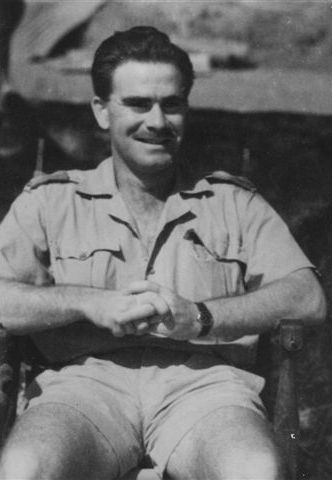
Seated behind him was Flying Officer Stanley William George Dellow, serving as navigator and observer. His responsibilities extended far beyond navigation. During low-level attacks he assisted in identifying targets, maintaining communications, monitoring the aircraft’s systems and helping his pilot locate enemy vessels in often difficult visibility. The close cooperation between pilot and observer was essential; survival frequently depended upon their ability to function as a single team under intense enemy fire.
On the morning of 12 September 1944, Geater and Dellow received orders for another armed reconnaissance over the Ionian Sea. Similar missions had been flown many times before, yet none of the crew could know that this sortie would become the final flight of KV930. Before the day was over, their aircraft would lie on the seabed off Ithaca, one airman would begin an extraordinary escape through occupied Greece, and the other would embark upon months of captivity in a German prisoner-of-war camp.
The events that followed would become one of the most remarkable survival stories associated with No. 19 Squadron’s operations in the Mediterranean.
The Mission to the Ionian Sea
The morning of 12 September 1944 began much like any other operational day for the aircrews of No. 19 Squadron SAAF at Biferno Airfield. Before dawn, pilots and observers assembled in the briefing room where intelligence officers outlined the day’s mission. Reports from Allied reconnaissance aircraft and signals intelligence indicated that German vessels were continuing to move supplies between the occupied Ionian Islands. Preventing these movements remained a high priority, as every ship destroyed further isolated the German garrisons defending Greece’s western coastline.
Lieutenant Ronald Arthur Geater and Flying Officer Stanley William George Dellow were assigned to Beaufighter Mk VI KV930, one of several aircraft detailed for an armed reconnaissance over the Ionian Sea. The mission was straightforward in concept but hazardous in execution: search for enemy shipping, attack any legitimate military targets encountered, and return to Biferno before darkness. Like all anti-shipping operations, success depended upon surprise. Enemy vessels often hugged the coastline or sought shelter among the islands, where cliffs and headlands could conceal them until the last moment.
After the briefing, the crews dispersed to their aircraft. Ground personnel completed the final inspections while armourers checked the Beaufighter’s formidable weapons. Fuel tanks were topped off for the long flight across the Adriatic, ammunition belts were loaded, and the four 20 mm Hispano cannon were prepared for action. Every member of the ground crew understood that the success of the mission—and the survival of the aircrew—depended on meticulous preparation.
Shortly before take-off, Geater and Dellow climbed aboard KV930. The pilot settled into the cockpit while Dellow took his position behind him, surrounded by navigation charts, radio equipment and flight instruments. As the twin Bristol Hercules engines roared to life, the aircraft taxied into position and lifted from Biferno’s steel-mesh runway, climbing eastward over the Adriatic Sea.
The crossing to Greece was uneventful. Flying at low altitude to reduce the likelihood of detection, the Beaufighters skimmed across the water, their dark camouflage blending with the sea below. Ahead lay the mountainous outline of the Ionian Islands, whose sheltered channels had become familiar hunting grounds for both Allied strike aircraft and German coastal convoys.
As the formation approached the waters north of Ithaca, the crews began searching for signs of enemy activity. The rugged coastline, dotted with small islands and narrow passages, offered ideal cover for German vessels attempting to avoid Allied aircraft. Constant vigilance was essential. A convoy might remain hidden behind a headland until the last seconds before an attack, leaving little time to organize a coordinated strike.
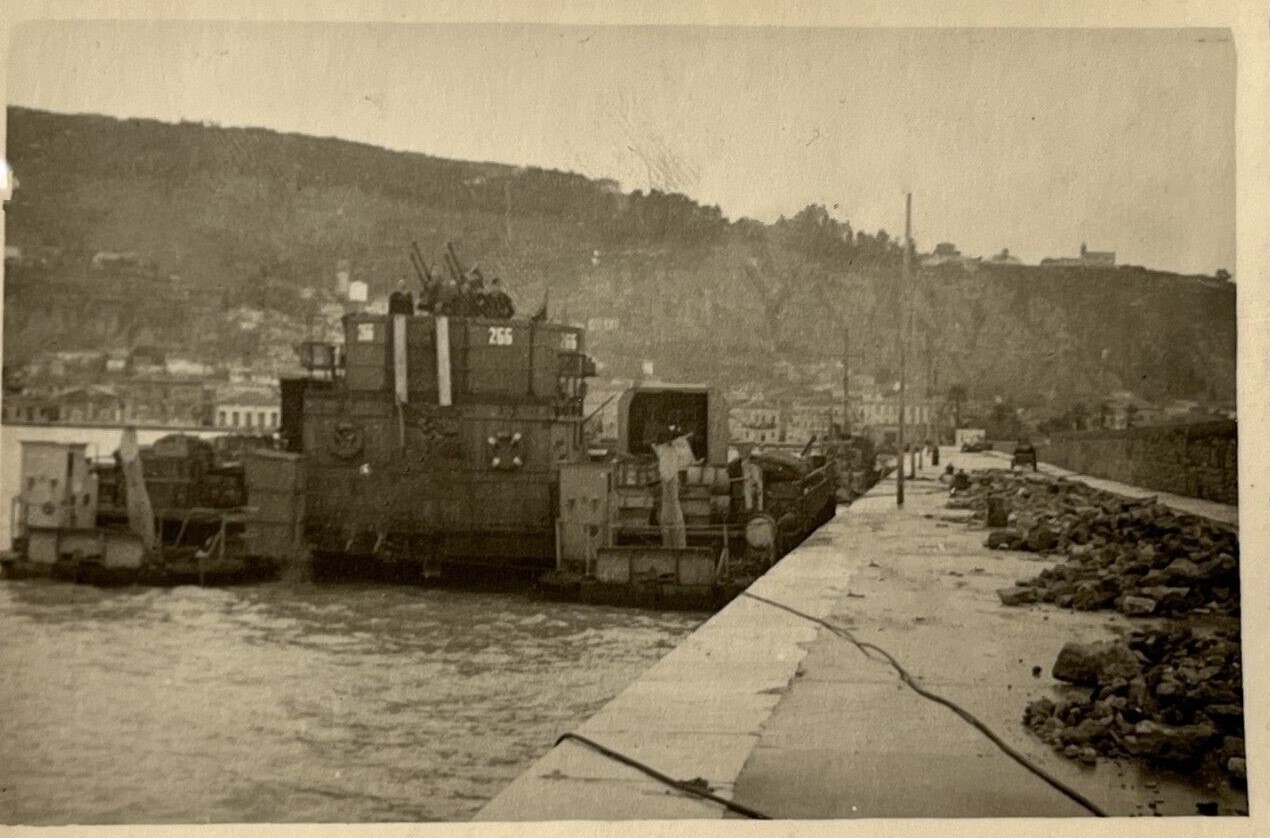
During the search, the aircrews sighted a German Siebel ferry, a shallow-draft vessel designed for transporting troops, vehicles and supplies between the islands. Although originally conceived as an improvised ferry, the Siebel type had evolved into a heavily armed military craft. Many carried anti-aircraft guns capable of creating a deadly defensive barrier against low-flying aircraft. Previous encounters had demonstrated that these vessels were far from easy targets; numerous Allied aircraft had been damaged or lost while attacking them.
Recognizing the military importance of the target, the Beaufighters turned to begin their attack. Diving toward the ferry at low level, they committed themselves to one of the most dangerous phases of any maritime strike operation. Once the attack commenced there could be no hesitation and little opportunity to evade enemy fire. Every pilot knew that success depended upon speed, precision and determination.
As KV930 closed the distance, the German gunners prepared to meet the approaching aircraft. Within moments, the calm waters north of Ithaca would erupt into one of the fiercest engagements experienced by Lieutenant Geater and Flying Officer Dellow.
The Attack and the Loss of KV930
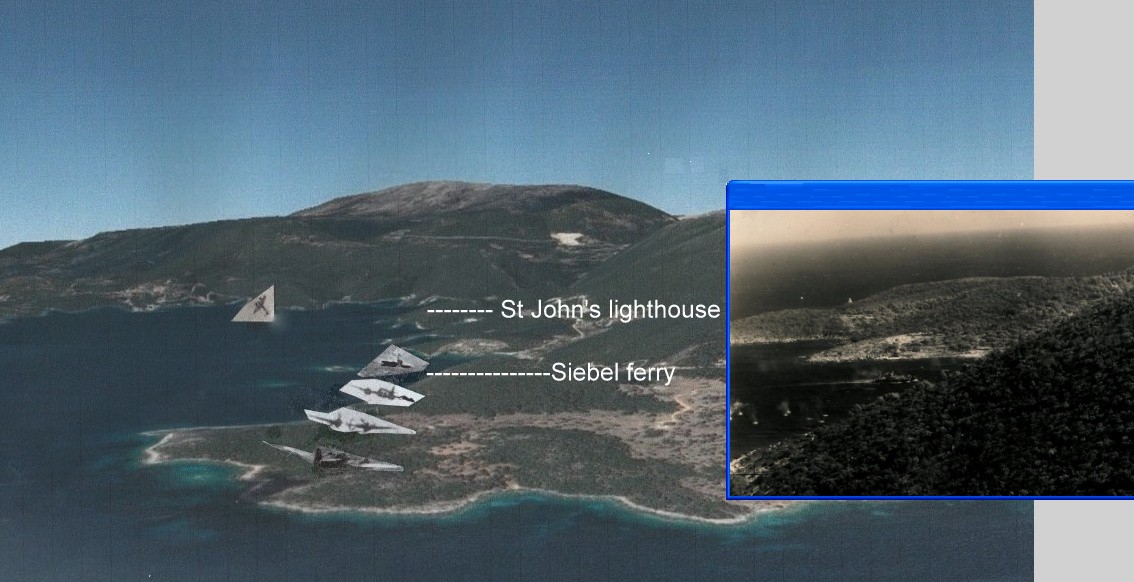
By late afternoon, the Beaufighters of No. 19 Squadron had reached the waters north of Ithaca. The sea was calm and visibility was good, ideal conditions for both attacking aircraft and defending gunners. The German Siebel ferry, identified as a legitimate military target, was moving through the channel under the protection of its anti-aircraft armament. Although small compared with larger naval vessels, these ferries had earned a formidable reputation among Allied aircrews. Their decks were crowded with automatic weapons capable of delivering an intense volume of fire against aircraft approaching at low altitude.
Lieutenant Ronald Arthur Geater positioned KV930 for the attack while Flying Officer Stanley William George Dellow monitored the target and the surrounding airspace. As with all Beaufighter anti-shipping strikes, surprise and speed were essential. Flying only a few meters above the sea, Geater lined up the ferry in his gunsight and committed the aircraft to its attack run.
The Beaufighter swept in at high speed. Its four 20 mm Hispano cannon and six machine guns opened fire, sending shells and bullets into the target. Other aircraft of the squadron also attacked, concentrating their fire on the ferry in an effort to disable or destroy it before it could reach the safety of the coastline.
The German response was immediate. Anti-aircraft guns from the ferry erupted in a curtain of fire, while additional weapons from nearby positions may also have joined the engagement. Tracer rounds streaked across the sky as the defending gunners attempted to track the attacking aircraft. For the Beaufighter crews there was little opportunity to evade. Once committed to the attack, they had to maintain a steady course long enough to hit their target, knowing that every second increased the risk of being struck.
During the attack, KV930 was hit. Enemy fire struck the aircraft’s starboard (right) engine, causing severe damage. Witness accounts and later reports indicate that the engine quickly lost power, making it impossible for the Beaufighter to continue the mission or undertake the long return flight across the Adriatic to Italy. Flying a heavily loaded twin-engine aircraft on one damaged engine over open sea presented an almost impossible challenge.
Despite the damage, Geater remained in control. Rather than attempting to gain altitude or turn sharply—actions that could have caused the aircraft to stall or spin into the sea—he concentrated on keeping the Beaufighter stable. Dellow immediately assessed the situation from his position in the rear cockpit, monitoring the aircraft’s condition and assisting his pilot as they prepared for the possibility of ditching.
It soon became clear that there was no hope of reaching friendly territory. The only realistic chance of survival was to bring the aircraft down on the water in a controlled landing. Such a manoeuvre demanded exceptional judgement. A Beaufighter approaching the sea too fast could break apart on impact; too slowly, and it might stall and strike the surface uncontrollably. Even a successful ditching carried enormous risks. The aircraft could overturn, sink rapidly, or trap its crew inside the cockpit.
With the coastline of Ithaca in sight, Geater made his decision. Holding the aircraft as level as possible, he eased KV930 down toward the sea. The Beaufighter struck the water heavily but remained intact long enough for both men to escape. Within moments, the aircraft began to sink beneath the surface of the Ionian Sea, carrying with it the mission, the machine, and all hope of returning to Italy by air.
Geater and Dellow inflated their emergency dinghy and climbed aboard. Behind them, the waters gradually closed over KV930, which disappeared beneath the waves. Alone in the sea off an island still under German occupation, the two airmen faced an uncertain future. Their survival would now depend not on the strength of their aircraft or the power of its engines, but on the courage of strangers.
Neither man could have known that the events of the next few days would become the most extraordinary chapter in the history of KV930.

Survival and the People of Ithaca
The ditching of KV930 marked the end of the air battle, but it was only the beginning of the crew’s ordeal. Floating in their small inflatable dinghy, Lieutenant Ronald Arthur Geater and Flying Officer Stanley William George Dellow found themselves in the waters off northern Ithaca, an island still under German occupation. Although they had escaped the sinking aircraft without serious injury, they remained in immediate danger. German patrol boats operated in the surrounding waters, enemy troops were stationed on the island, and capture seemed almost inevitable.
For a time, the two airmen drifted at sea, uncertain whether help would come from friend or foe. Their emergency equipment was limited, and every passing minute increased the possibility that they would be spotted by German forces. Yet fortune favoured them. Local Greek fishermen and islanders became aware of their presence and, despite the risk involved, came to their assistance.
Helping Allied servicemen was a dangerous act. Throughout occupied Greece, German military authorities imposed severe penalties on civilians who sheltered escaped prisoners or downed airmen. Arrest, imprisonment, deportation, and even execution were real possibilities. Despite these dangers, many Greeks chose to assist Allied personnel, motivated by patriotism, compassion, or their own opposition to the occupation.
Geater and Dellow were brought ashore and hidden with the help of local inhabitants. Their rescuers provided food, dry clothing, and shelter while attempting to determine the safest way of returning them to Allied-controlled territory. Communication was often difficult. Few islanders spoke English, and the airmen knew little or no Greek. Nevertheless, acts of kindness bridged the language barrier, and the two men quickly realized they were among people determined to help them despite the risks.
The assistance offered to the airmen was not the work of one individual alone. It formed part of a wider network of local civilians and members of the Greek resistance who had, throughout the occupation, helped Allied soldiers, sailors, and airmen evade capture. Across the Ionian Islands, these informal escape routes relied upon trusted fishermen, village families, clergy, and resistance contacts, all working in secrecy under the constant threat of betrayal.
For Geater and Dellow, every decision now carried enormous consequences. Remaining hidden on Ithaca indefinitely was impossible. German search parties could appear at any moment, and reports of a downed Allied aircraft would almost certainly prompt increased patrols. The only realistic hope lay in reaching the Italian coast by sea, a journey that required a suitable boat, favorable weather, and considerable luck.
The two airmen were to be taken to the port of Kioni and from there to Vathy -the capital of Ithaca- and to the Greek mainland but other incidents were going to take place there that changed all the story.
Preparations were therefore made for an escape under cover of darkness. Local helpers arranged for the two airmen to be taken aboard a small fishing boat that would attempt the crossing toward Allied-held territory. The plan was simple but dangerous. Travelling by night offered the best chance of avoiding German patrols, yet the waters between the Ionian Islands remained closely watched. Any vessel found carrying escaped Allied personnel faced immediate interception.
As darkness fell, Geater and Dellow left their temporary refuge and boarded the fishing boat with their Greek companions. They could not know that their rescue was about to enter its most perilous phase. Before dawn, their fragile hope of freedom would be shattered by an unexpected encounter with German forces, an encounter that would separate the two men and determine their very different destinies.
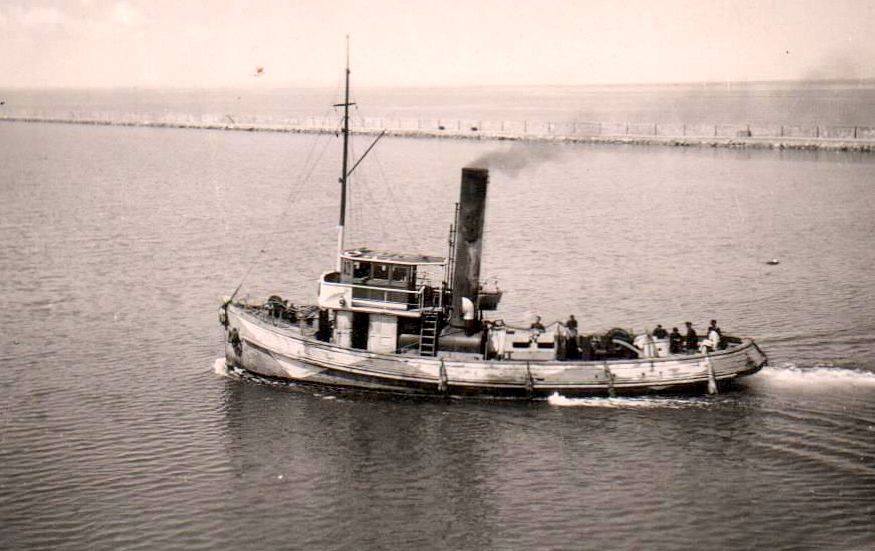
The tug boat Maria Antouanetta and its capture at the port of Frikes.
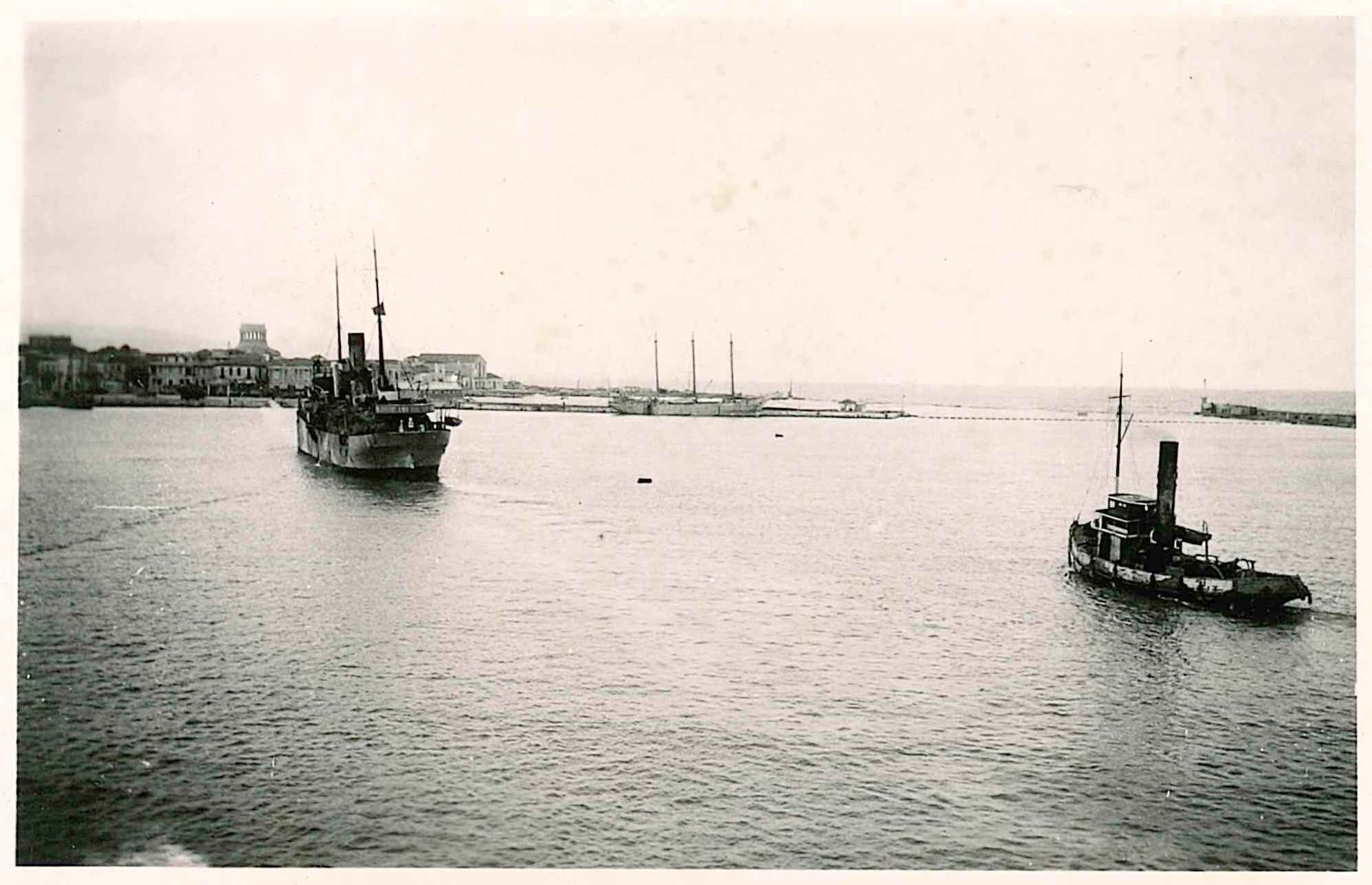
Having transmitted their coordinates before their vessel sank, the shipwrecked crew of the Siebel ferry managed to come ashore some miles from Kioni. They established a rudimentary fortification and waited to be rescued. Soon after, a German ship, a tug boat from Patras arrived at Frikes and docked. Its crew went ashore to search for the survivors, leaving only a German engineer and two Italian prisoners in the engine room to maintain the machinery.
Every single one of these movements was closely monitored by ELAS and the ELAN forces stationed in Vathy. The local population watched intently as well; completely aware of the unfolding developments, the residents practically participated in the entire operation.
The moment the German ship that arrived at Frikes was under ELAS and ELAN watch . Command in Vathy decided to launch an operation to capture it.
Partisan fighters boarded the ELAN vessel Demokratia and set out to seize the enemy ship. Upon arriving at Frikes, they pulled up right alongside it. A young rebel nicknamed “Kolotripidis,” accompanied by two companions, took charge of the assault. Holding knives between their teeth and pistols in their hands, they scaled the sides of the ship.
The deck was completely deserted. The captain’s cabin and the crew quarters were equally empty. Descending into the engine room, the rebels caught the Italians and the German engineer by surprise. The engineer immediately threw his hands up, shouting, “I am a communist! I am a communist!”—a frantic claim he made solely to save his skin.
Despite his desperate assurances, the rebels locked him and the Italians inside the engine room. This ultimately proved to be their fatal mistake. Because the partisans did not know how to start the ship’s engines to sail it to Kioni, they decided to tow it using their own boat, intending to celebrate their triumph the following day. However, a radio had been left inside the engine room. The self-proclaimed German “communist” immediately used it to alert his actual comrades in Patras and Preveza.
Escape, Separation and Capture
When they arrived at Kioni they realized that there had also been transferred the two British airmen after the Beaufighter crash . Their escape had been planned , They had to be transferred to Vathi firstly and from there to the Greek mainland as soon as possible.
As darkness settled over the Ionian Sea, the small fishing boat slipped quietly away from Kioni. On board were Lieutenant Ronald Arthur Geater, Flying Officer Stanley William George Dellow and the Greek islanders who had volunteered to guide them toward Allied-held Italy. Their journey depended on secrecy. The fishing boat had also the captured Maria Antoinetta on tow.
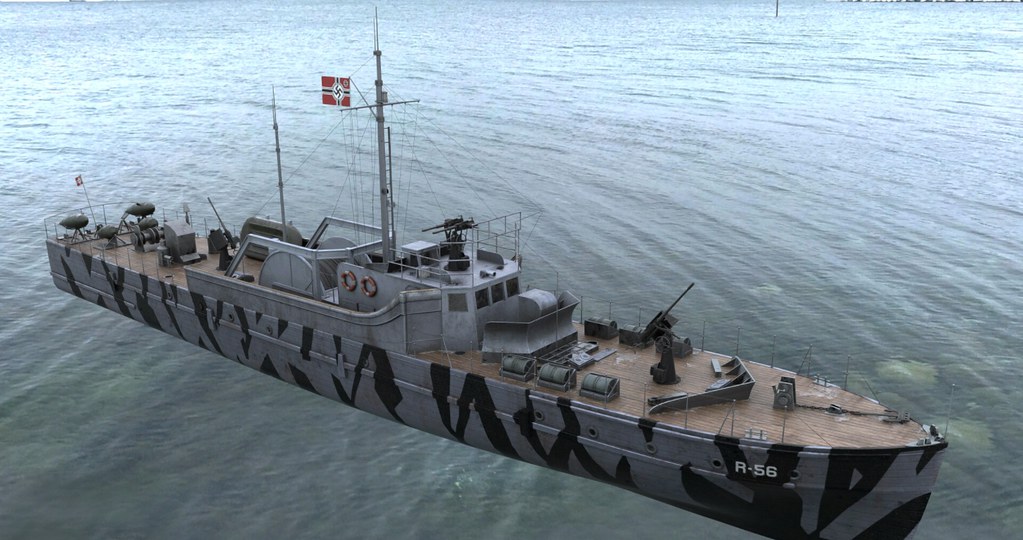
It was around 10:00 PM on the evening of September 14, and darkness had already set in. Two German Raumboats arrived at the harbor entrance of Vathy, the capital of Ithaca (Thiaki). One of them immediately , entered the harbor. Although the Greek resistance rebels had a guard post with mortars at the entrance, they did not fire because the enemy ship was heavily armed with cannons.
The R-boat sailed into the middle of the harbor and stopped. It swept the entire area with its searchlights, looking for a missing German ship. All around the harbor, several ELAN (resistance) boats were anchored, flying Greek flags. From the elevated village of Perachori, the night scene looked spectacular and panoramic, yet deeply dramatic. The streets were filled with local residents who were anxious, confused, and curious about what would happen next.
When the enemy ship failed to find what it was looking for, it turned around to leave. However, as it headed back, at the entrance of the gulf , it collided head-on with the Greek resistance caique Democratia that was towing the captured German tug boat , hidden up to that moment from the R boat by the caique’s sails.
Witnesses later said that a German officer standing on the bow asked the crew in Greek if they had seen a German ship captured by partisans. The crew of the Democratia denied seeing anything, and the German warship began to move away. However, as soon as it advanced a short distance, the rebels aboard the Democratia opened fire with sudden bursts of machine-gun fire.
The R-boat immediately halted and began blasting both vessels with its heavy cannons. After a long, intense bombardment, the German warship sank both Greek ships. The Italian crew members and the German who were locked in the engine room went down with the vessel.
The Greek rebels jumped into the sea and swam ashore, but they suffered three casualties. Two partisan fighters, Vasilis Papafotis age 23 and George Tribilas age 22, were killed together with the Italian crew and the German officer .
Caught completely by surprise, those aboard had only seconds to react. The fishing boat offered no protection against armed patrol craft, and remaining on board was no longer an option. In the confusion, Lieutenant Geater made the split-second decision to enter the water. A strong swimmer, he plunged into the sea under cover of darkness and swam away from the boat before the German patrol could locate him.
Flying Officer Dellow faced a different reality. He was unable to swim, and escape by water was impossible. Left aboard the fishing boat, he was taken prisoner when the Germans secured the vessel. His war as a combat airman had ended; another ordeal, that of captivity, was about to begin.
Geater, meanwhile, found himself alone in the sea. With no lights to guide him and uncertain of the exact position of the shoreline, he swam toward the darkness, relying on instinct and determination. Exhausted, he eventually reached land and once again found refuge among the people of Ithaca. Despite the increased German presence following the interception of the escape attempt, local inhabitants sheltered him for a second time, demonstrating extraordinary courage in the face of mounting danger.
As soon as the German ship began firing its cannons, the residents of Vathi and Perachori fled further up the mountain. They feared the warships would bombard the village, as its high vantage point made it an easy target.
The people ascended, passing through the forest of their village, reaching the top of Niritos mountain , on the plateau that forms there, and lying down, they watched the flashes from the cannon shots , first seeing their flares and then their noise reaching their ears.
At that time, an English airplane also appeared. Flying at a high altitude, it released flares of light, which, forming the shape of a cross in the sky, brightened and illuminated the darkness.
These crosses of flares, the old women, always the same, explained as “miracles.”
However, due to the night, the plane did not make any intervention.
In the early morning hours, the cannon bombardment stopped. The ships being bombed had both sunk.
The German ships had left.
The villagers , some went down and slept in their homes and others woke up on the peaks and plateaus of Niritos.
Over the following days, Geater was moved between safe locations while efforts were made to organize another escape. The island had become increasingly hazardous. German patrols intensified their searches, aware that at least one Allied airman had evaded capture. Nevertheless, the network of local civilians and resistance contacts remained active, protecting the young South African pilot until another opportunity presented itself.
Eventually, through a combination of careful planning, local assistance and determination, Geater succeeded in leaving occupied territory and reached Allied forces in Italy. His return to No. 19 Squadron was nothing short of remarkable. Having survived the loss of his aircraft, a hazardous ditching, days in hiding and a failed escape attempt, he became one of the few Allied airmen to evade capture under such difficult circumstances.
For Stanley Dellow, events took a different course. After his capture he was transferred through the German prisoner-of-war system before being sent to Stalag Luft III, the camp made famous by the “Great Escape.” There he remained until the closing months of the war, enduring the hardships of captivity alongside hundreds of other Allied airmen.
The fate of the two men had diverged in a single moment on the dark waters off Ithaca. One returned to active service; the other would not regain his freedom until Germany’s defeat in 1945.
Two Different Journeys
The loss of Beaufighter KV930 marked the beginning of two very different wartime experiences for its crew. Although Lieutenant Ronald Arthur Geater and Flying Officer Stanley William George Dellow had survived the ditching together, their separation during the failed escape from Ithaca determined the course of the remainder of the war for each man.
For Geater, the days that followed demanded endurance, patience and absolute trust in the people who had chosen to help him. Hidden by Greek civilians and members of the resistance, he remained in constant danger of discovery. German forces maintained their presence on Ithaca and neighboring islands, while patrols continued to search for escaped Allied personnel. Every movement had to be carefully planned, and every person involved accepted considerable personal risk. A single informant or chance encounter could have resulted in arrest or worse.
With the assistance of the local escape network, Geater eventually succeeded in leaving occupied territory and returning to Allied lines in southern Italy. His safe arrival was welcomed by No. 19 Squadron, which had long regarded him as missing. His survival owed much to his own determination and flying skill, but equally to the courage and generosity of the Greek civilians who had sheltered him when they themselves lived under enemy occupation.
Flying Officer Stanley William George Dellow faced a very different future. Following his capture by German forces, he entered the established prisoner-of-war system for Allied airmen. After interrogation, he was transferred to Stalag Luft III, one of Germany’s principal camps for captured air force personnel. Life in the camp was marked by uncertainty, overcrowding and the constant struggle to maintain morale. Although protected to some extent by the Geneva Convention, prisoners endured shortages of food, harsh winters and prolonged separation from their families.
As the Third Reich collapsed during the spring of 1945, prisoners at Stalag Luft III were forced westward in difficult conditions ahead of the advancing Soviet Army. Only after Germany’s surrender in May 1945 did Dellow finally regain his freedom. Like thousands of former prisoners of war, he returned home carrying memories of captivity that would remain with him for the rest of his life.
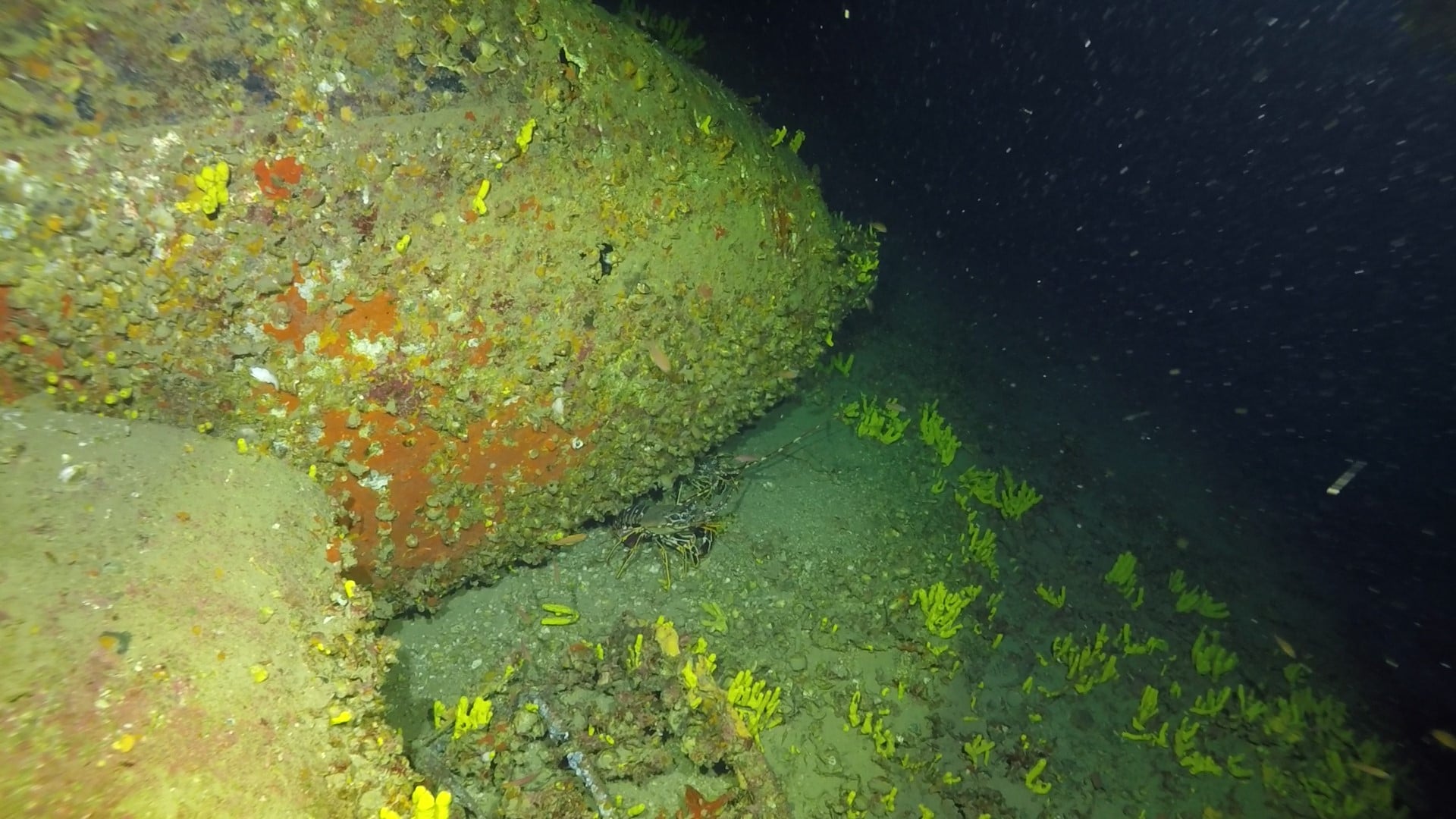
The story of KV930 did not end with the war. The aircraft itself remained on the seabed off Ithaca, gradually becoming part of the underwater landscape. Hidden beneath the clear waters of the Ionian Sea, it rested undisturbed for decades, known only through wartime records and the recollections of those who had survived its loss.
Interest in the aircraft revived many years later, when Makis Sotiropoulos managed to locate the wreck with side scan sonar.
Dives by him and his team took place for the definitive identification of the wreck
Careful examination of the remains, together with historical research, led to the identification of the wreck as Bristol Beaufighter KV930. The discovery provided tangible confirmation of the events of 12 September 1944 and established the site as an important piece of the Second World War’s archaeological heritage.
Today, the wreck remains a protected reminder of the air war over Greece. Resting silently on the seabed, it represents more than the loss of an aircraft. It is a memorial to the courage of its crew, to the dangers faced by Allied airmen flying low-level strike missions, and to the people of Ithaca who chose to help strangers despite the risks imposed by occupation.
Notes
The German ship taken by the guerrillas at Ithaki was the Italian – captured by the Germans after 9 September 1943- tug “Marie Antoinette”, which the guerrillas managed to capture at Frikes.
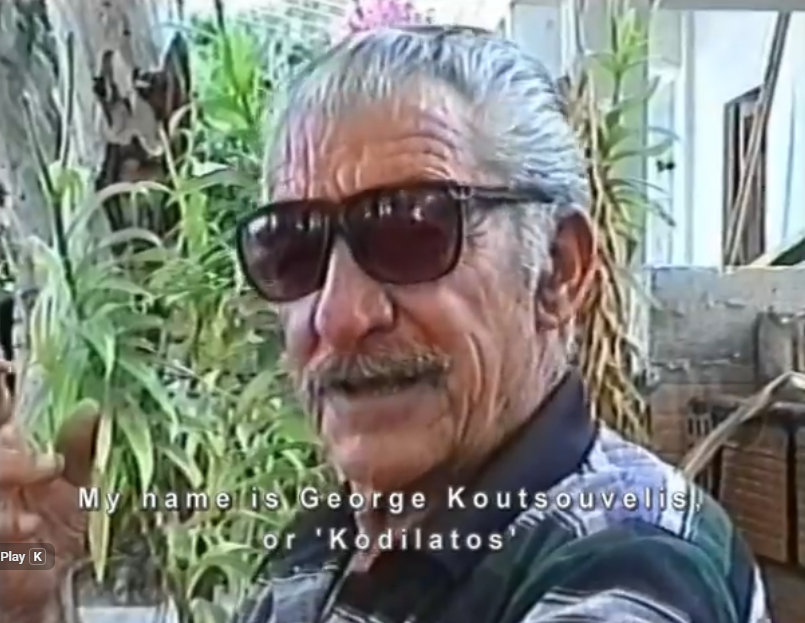
See also the short book by the National Resistance fighter George Koutsouvelis (Kontilatos) from Kioni, Memories of the Occupation and the Insurrection, (chapter “Marie Antoinette”, pp. 25-27), who personally took part in the operation to capture the ship and also possesses the insignia of its German commander. His story is on YOUTUBE
https://www.youtube.com/watch?v=jjuwWUcz_gk
Greek partizans that took part at the operation were
Captain of EAM , Frixos Kaliakos from Xeromero
Dinos Moukas Moraitis from Kioni
Giorgos Koutsouvelis from Kioni
Tsintilas Gerasimos from Vathy
Michas from Vathy and
Papakostas from Xeromero
Book that describes this event with detail: Vangelis Sakatos , Acqui division, publisher Estia