
The “Lost” German Shelters of Theriano: An Investigation in Achaia, Peloponnese, Greece, by Konstantinos Kyrimis
Text and research: Konstantinos Kyrimis
Were there really 500 metres of underground tunnels? What do two forgotten German occupation-era structures conceal, and what connection might they have had with the area’s anti-aircraft defences?
In the summer of 2026, a news report from Achaia attracted considerable attention among military-history enthusiasts. A local publication reported the discovery of two German shelters at Theriano, near Patras. One was described as “small”, while the other was presented as an impressive underground complex containing more than 500 metres of tunnels. The claim could hardly go unnoticed. A previously unknown German underground installation of such a scale would certainly have been a significant find for the study of the military heritage of the German occupation in Achaia. The author therefore organised a small research expedition to Theriano.
With the assistance of Mr Nasos Koumantos, Professor at the Department of Architecture of the University of Patras, we established contact with Mr Angelos Gkountanis, president of the Theriano community. Our objective was straightforward: to locate the two structures, enter the tunnels, and determine what actually lay beneath the ground.
Before Entering the Tunnels
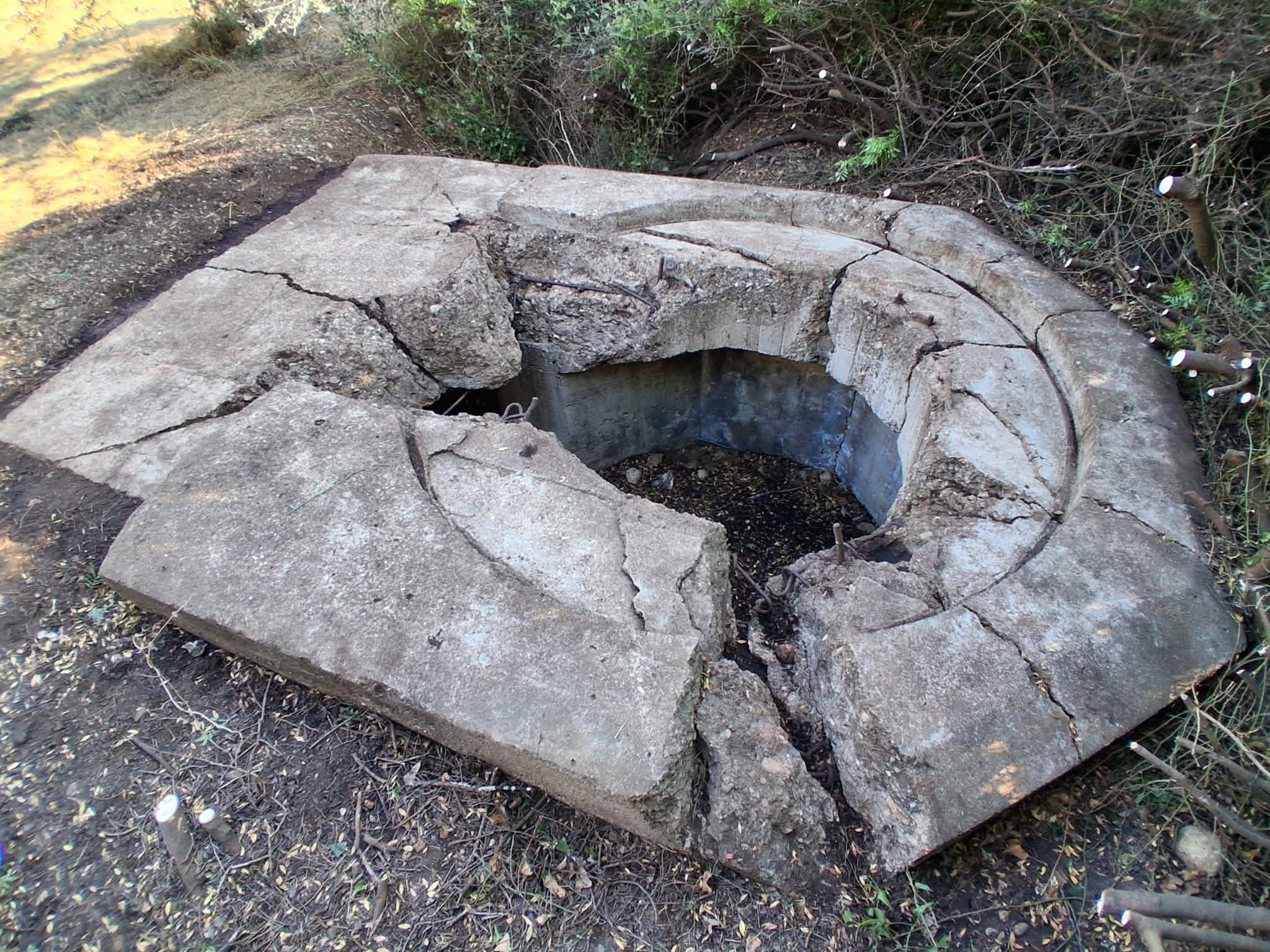
The investigation began with a meeting that proved particularly valuable. Mr Nikolaos Gkountanis, a local resident born in 1939, provided us with information concerning the presence of the occupation forces in the area. According to his testimony, during the occupation Theriano was used as a headquarters for the local occupation forces because of its strategic location. Their presence was not limited to a simple military outpost. The village had been reinforced with various defensive works, including improvised machine-gun positions, concrete structures of the “Tobruk” type, trenches, fencing and guard posts. The inhabitants were required to participate on a daily basis in labour for the occupation authorities. Among these tasks was the excavation of the underground tunnels. This information provided an important first indication: the two structures were not isolated from the military environment of the period. Rather, they formed part of a broader defensive organization of the area.
The Shelter Lost in the Vegetation
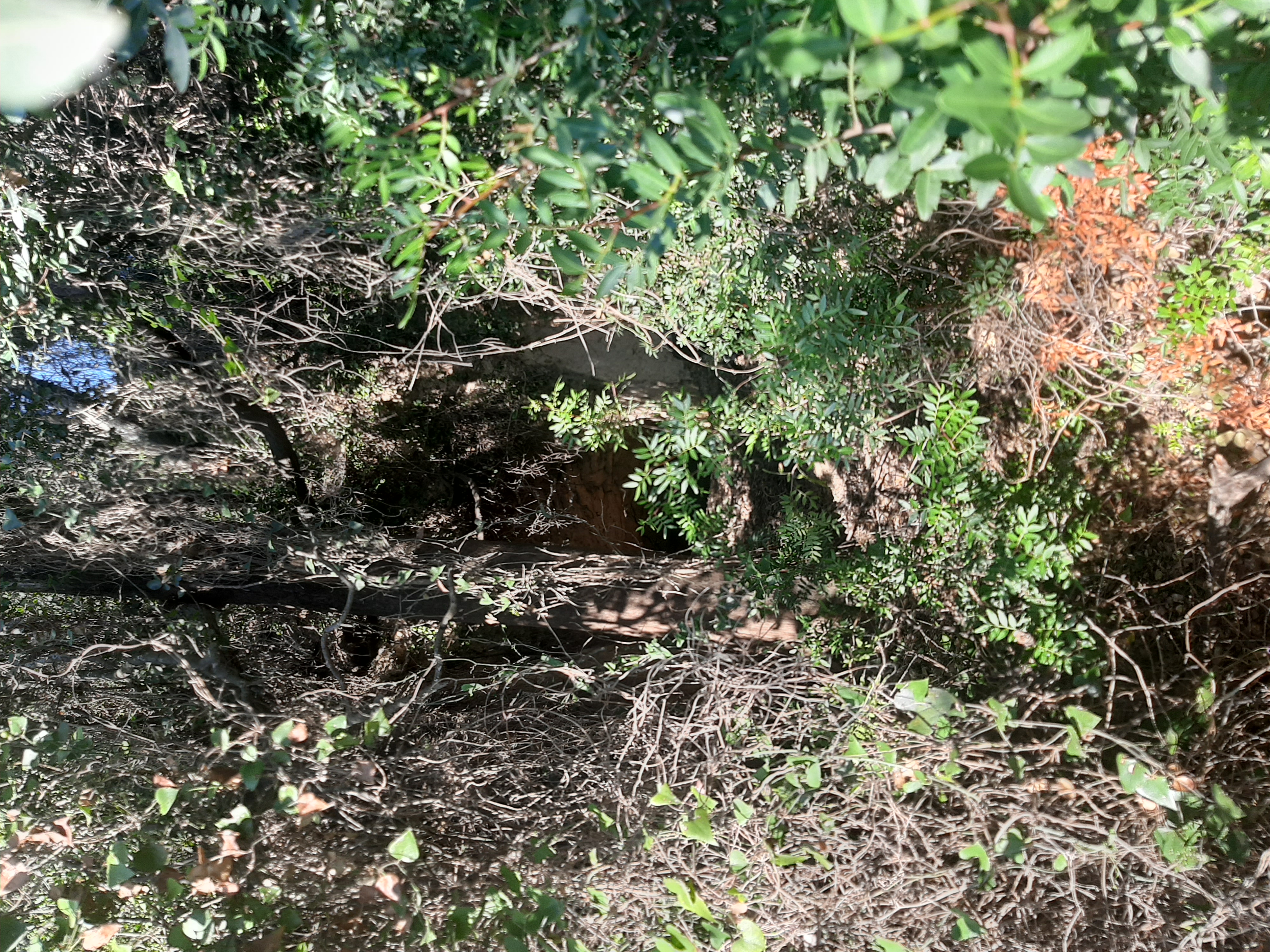
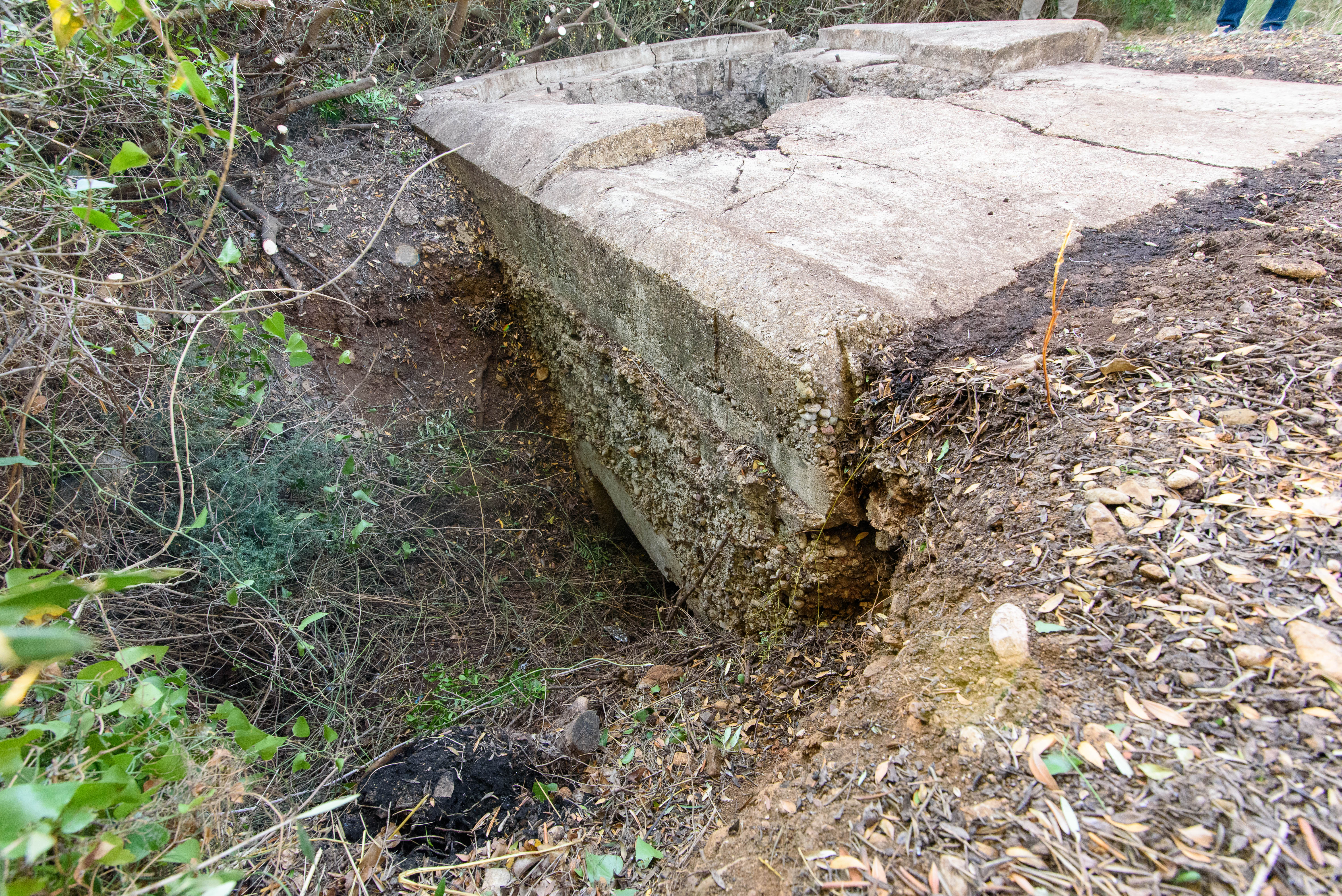
The story of the larger of the two structures was even more intriguing. According to Mr Angelos Gkountanis, until the 1970s the shelter was known to local residents and was relatively easy to access. It was located in a small ravine and was frequently visited by children from the village. Then nature gradually did what time alone had not managed to do. The vegetation became increasingly dense, access became more difficult, and the exact location of the shelter was gradually forgotten. For approximately fifty years, the structure effectively disappeared from human activity. A major wildfire in the area changed the situation.
The resulting clearance of the vegetation made it possible to search for the shelter once again. Mr Gkountanis succeeded in locating the entrance and ventured approximately 20 metres inside. He did not proceed any further, however, as the condition of the tunnels did not permit easy or safe movement. Our visit would therefore constitute the first attempt in approximately half a century to examine the structure along as much of its accessible extent as possible.
55 Meters of Tunnels in the “Small” Shelter
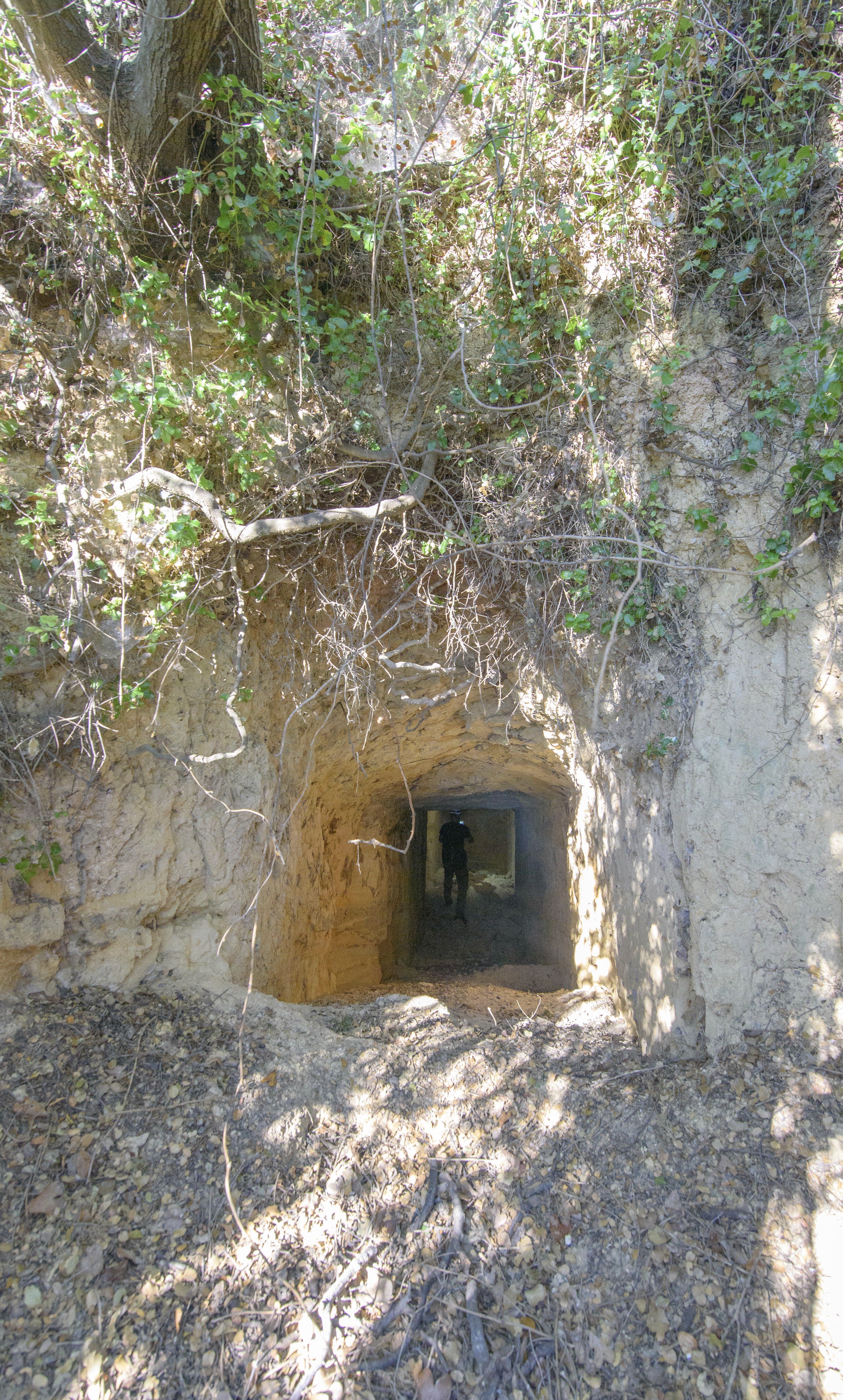
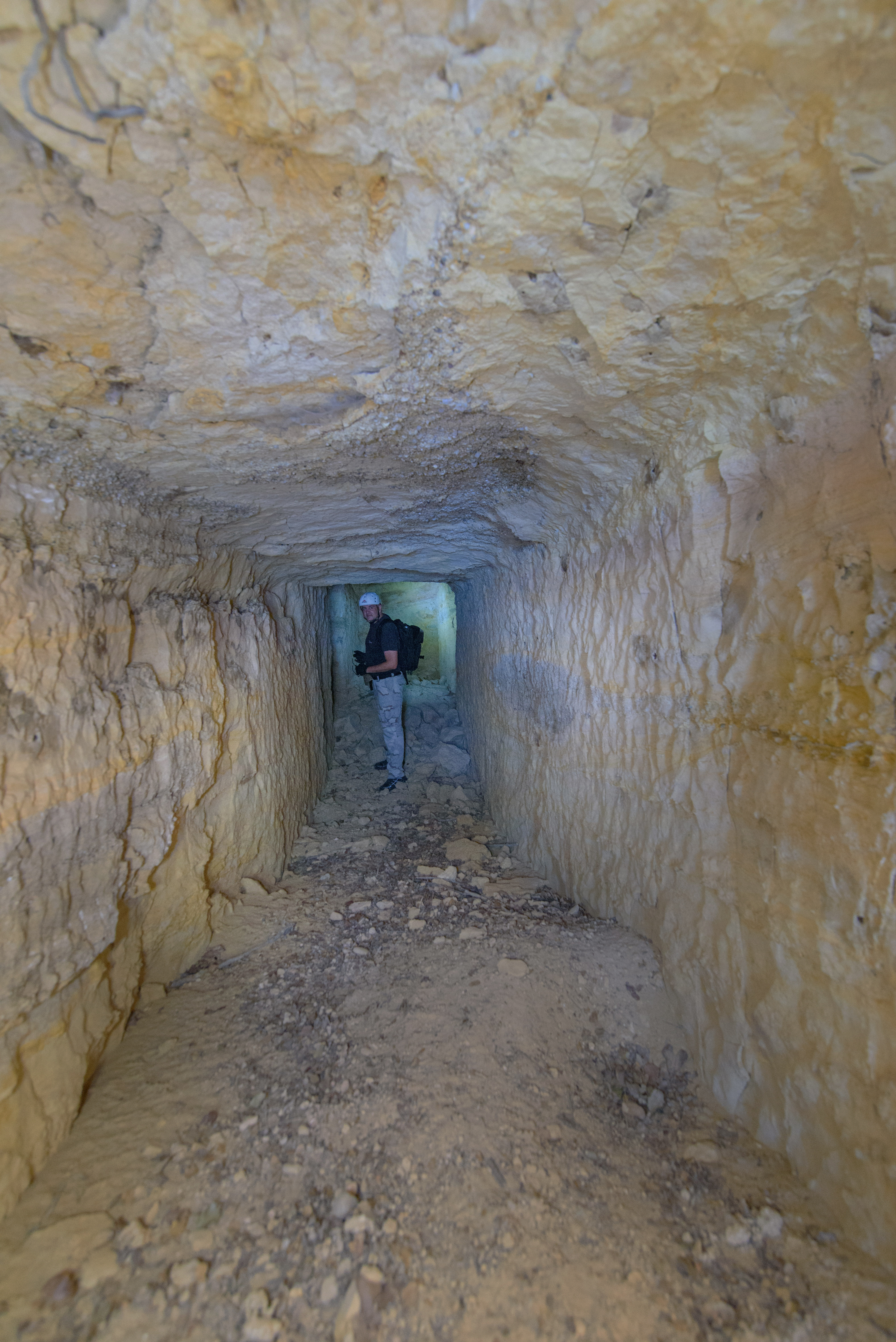
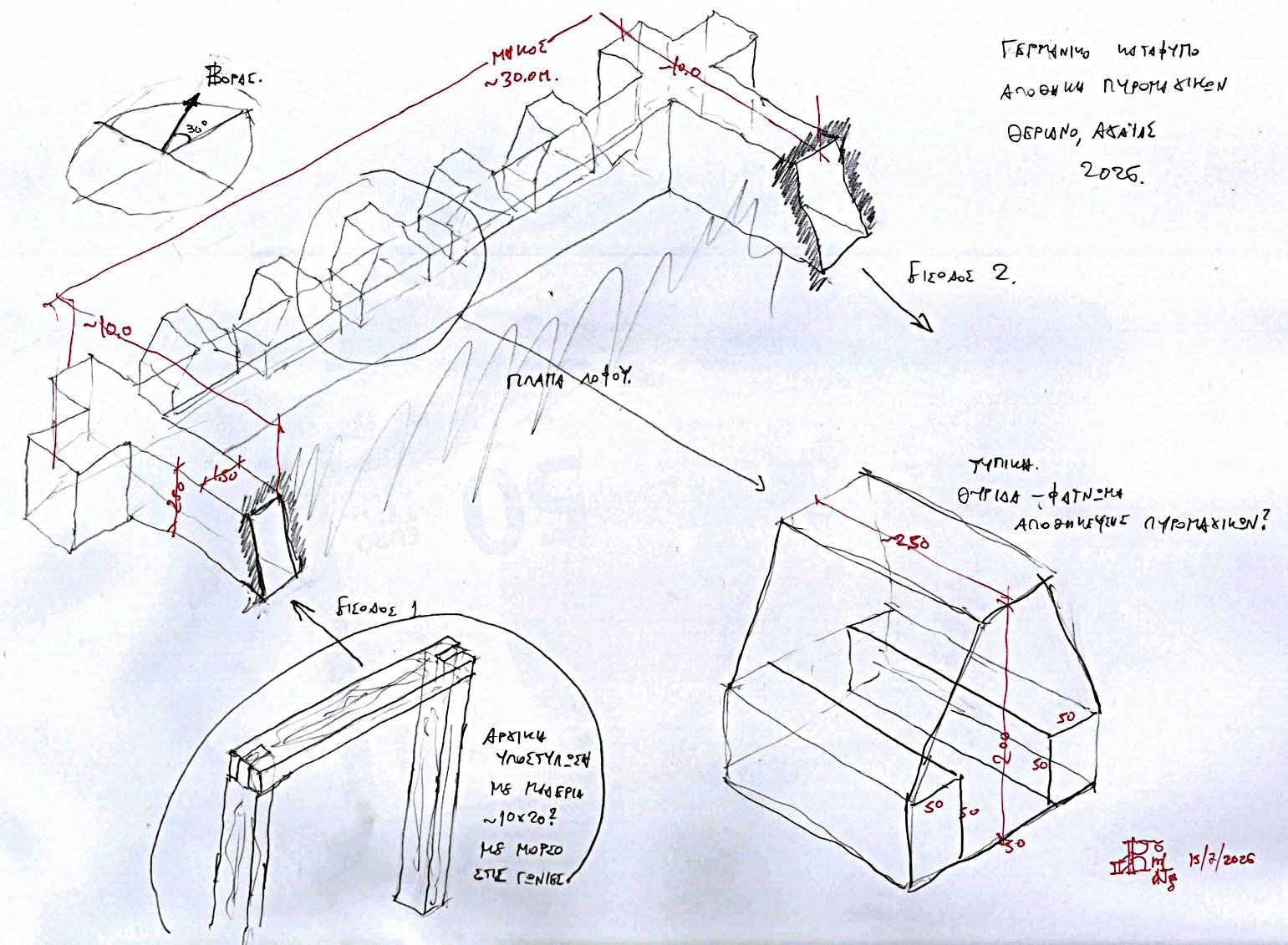
The first structure proved relatively easy to locate and examine. It consists of a simple underground complex of three tunnels arranged in a “Π” shape. There are two entrances, one at each side of the structure, leading towards a transverse central tunnel. The two entrance tunnels are approximately 10 meters long each, while the central tunnel measures around 35 meters. The total length of the tunnel system is therefore approximately 55 meters.
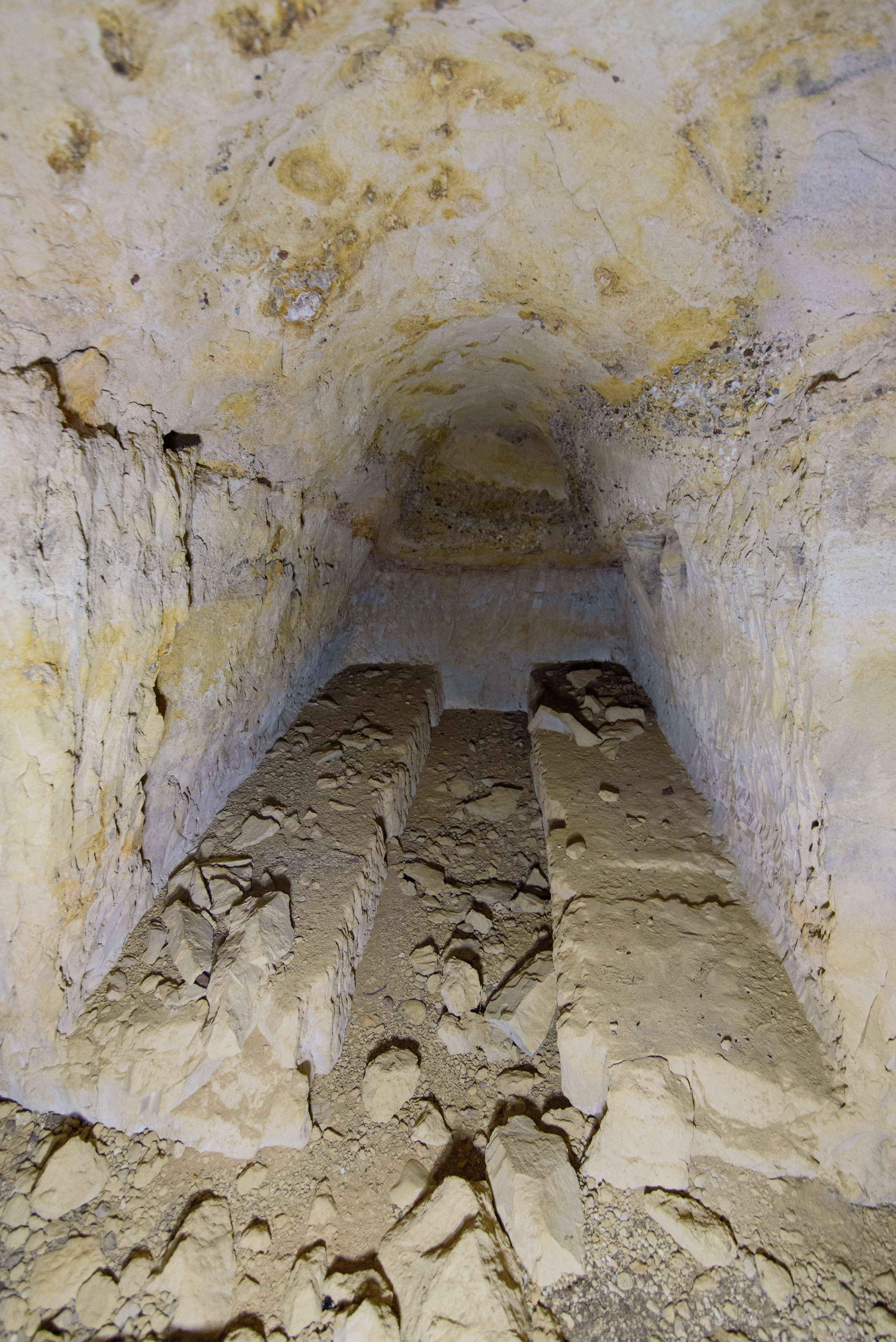
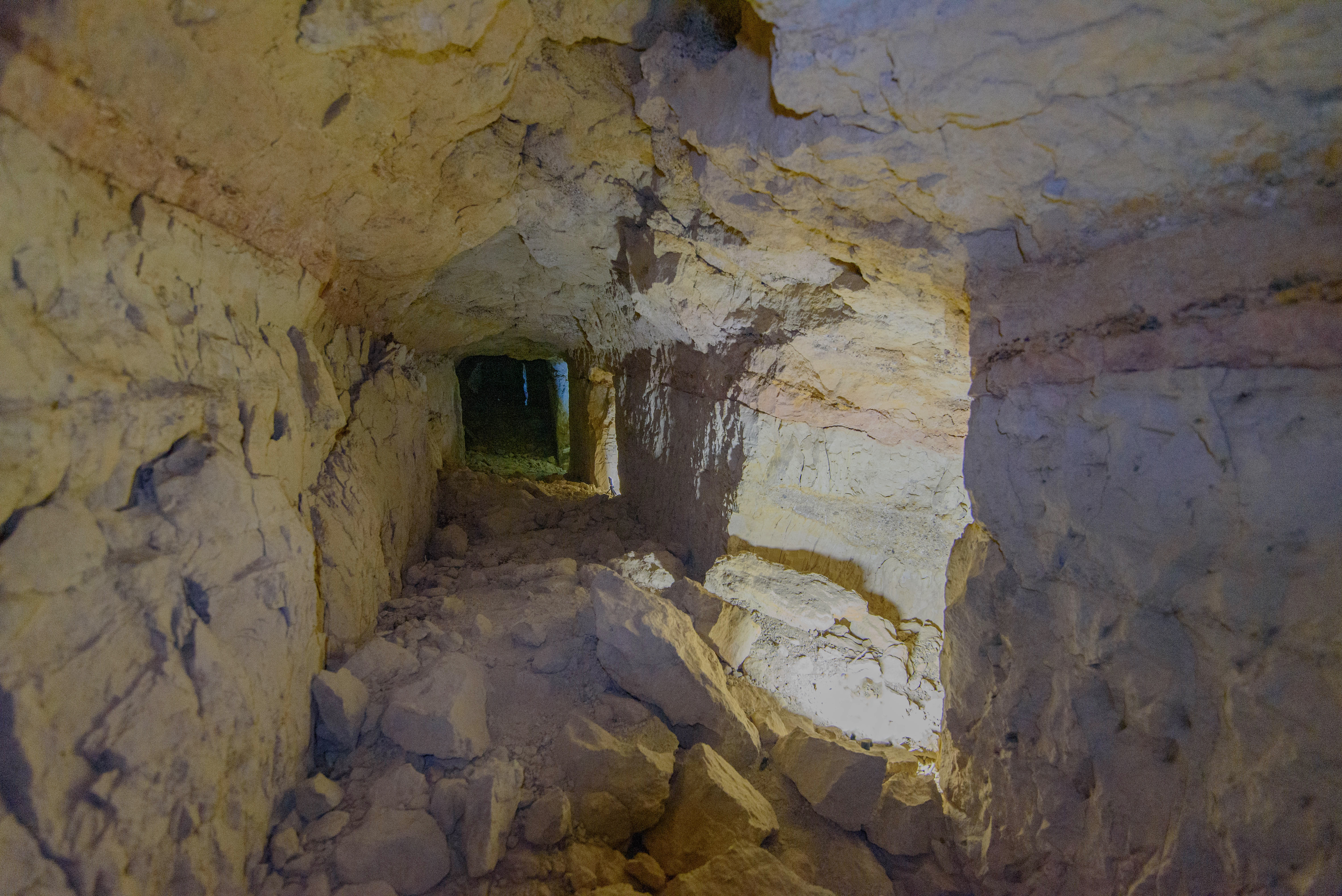
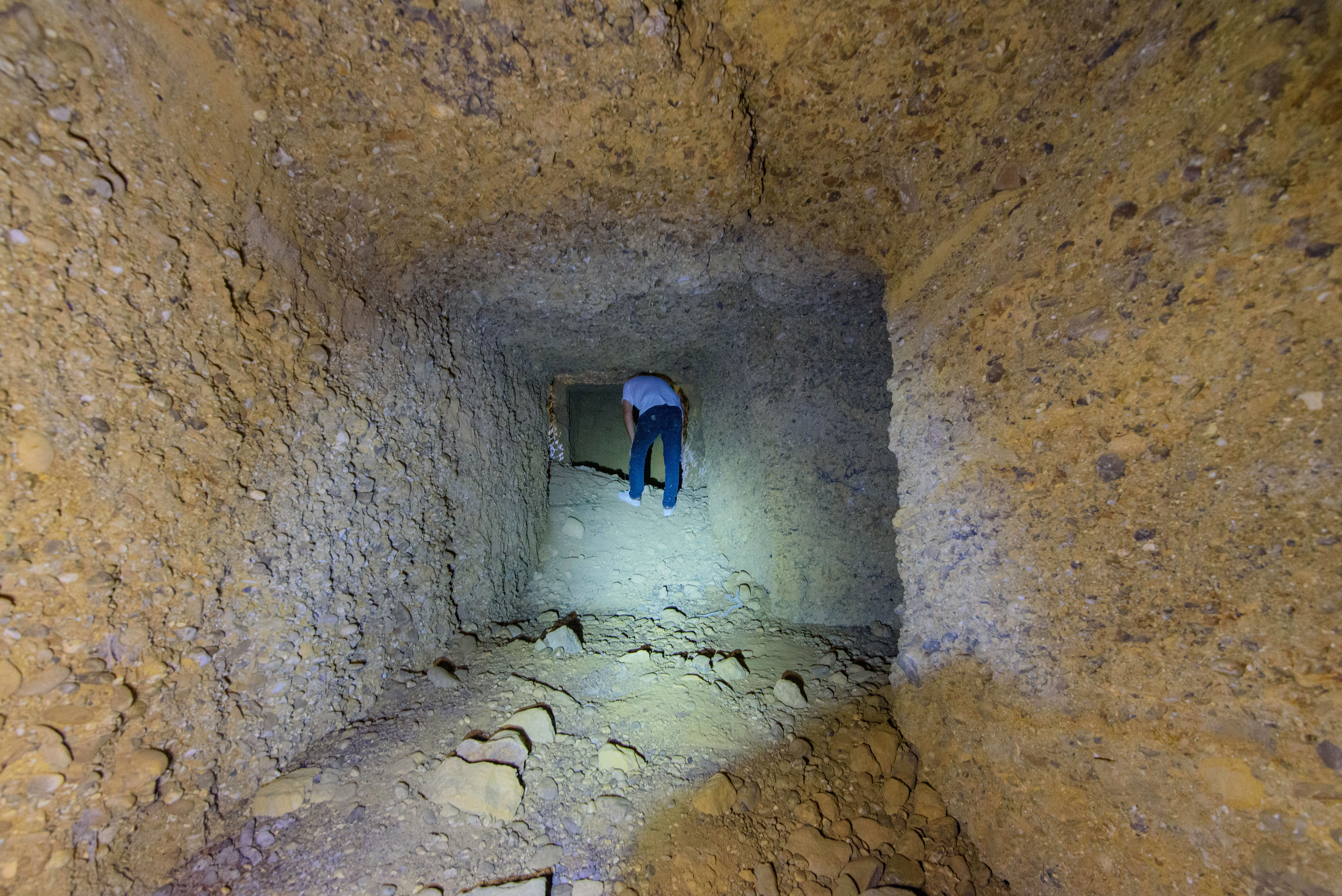
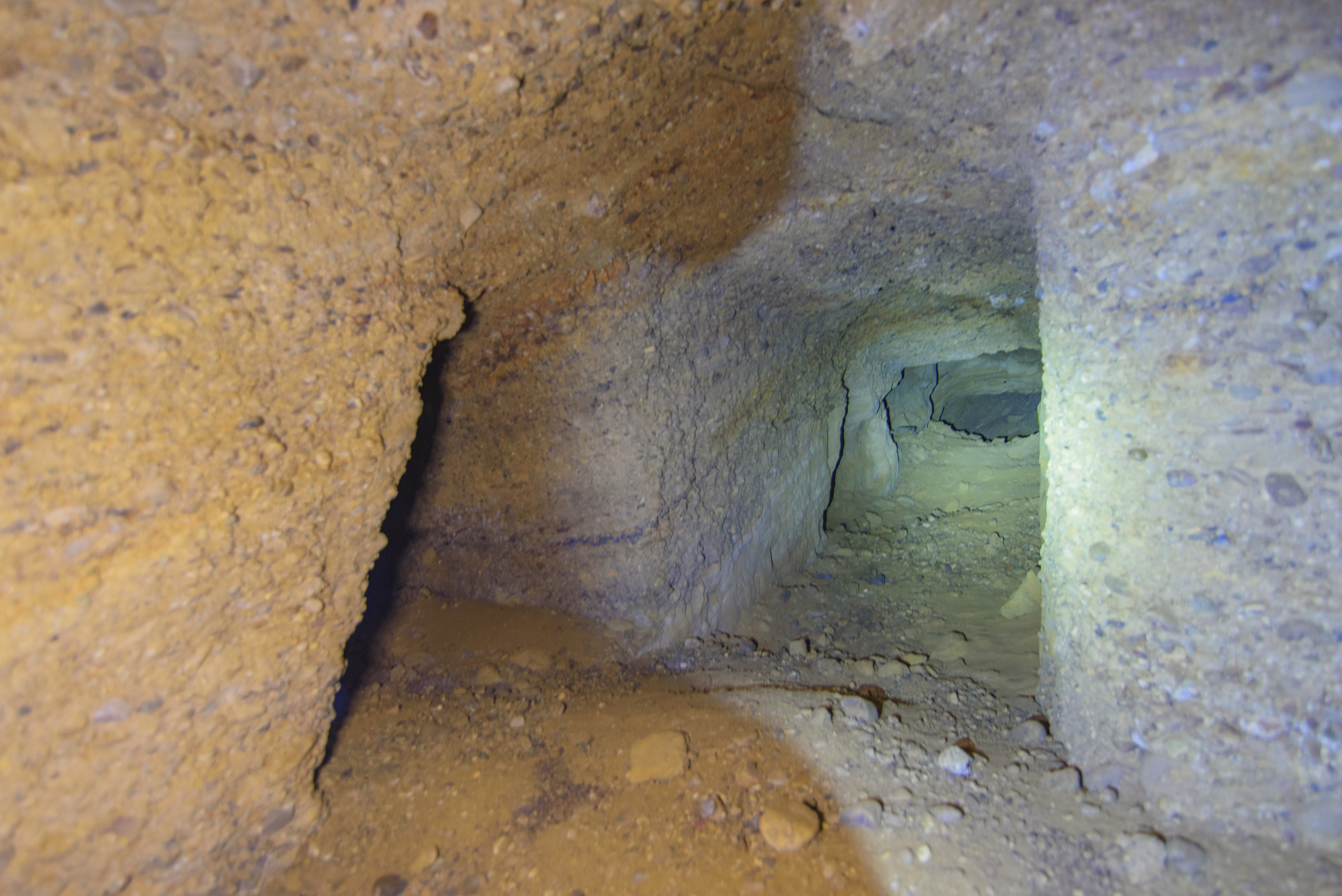
The tunnels are between 1,5 and 2 meters wide. The entrances descend towards the interior and were excavated into the slope of a hill. Despite the relatively modest size of the installation, its present location is remarkably difficult to identify. Vegetation has largely concealed the openings, and a person can stand only a few meters away without realizing that they are there. Nine lateral recesses are located along the central tunnel. Each covers approximately 1–4 square meters. Their configuration is particularly noteworthy. Their dimensions appear to suggest storage spaces rather than conventional personnel accommodation. Even more characteristic is the construction of the tunnels themselves. There is no concrete lining. The entire structure was essentially excavated directly into the rock. The low cohesion of the soil has resulted in extensive collapses. In several places, sections of the roof and walls have given way, reducing the present internal height to approximately 1–2 metres.¹
Shelter or Ammunition Store?
At this point, an important question arose. Was this actually a conventional German personnel shelter? The evidence does not appear to support that interpretation. The simple construction, the absence of concrete reinforcement and the arrangement of the lateral recesses suggest that the original purpose of the structure may have been different. One possible interpretation is that it served as an underground storage facility, possibly for ammunition. This, of course, does not rule out its temporary use for personnel protection during an air raid. Another piece of evidence lends support to this hypothesis. A German map dated 15 July 1943 indicates a significant presence of anti-aircraft guns in the area.² The underground structures at Theriano should therefore perhaps not be regarded as isolated “shelters”, but rather examined within the broader military deployment of the area.
And What About the “500 Meters”?
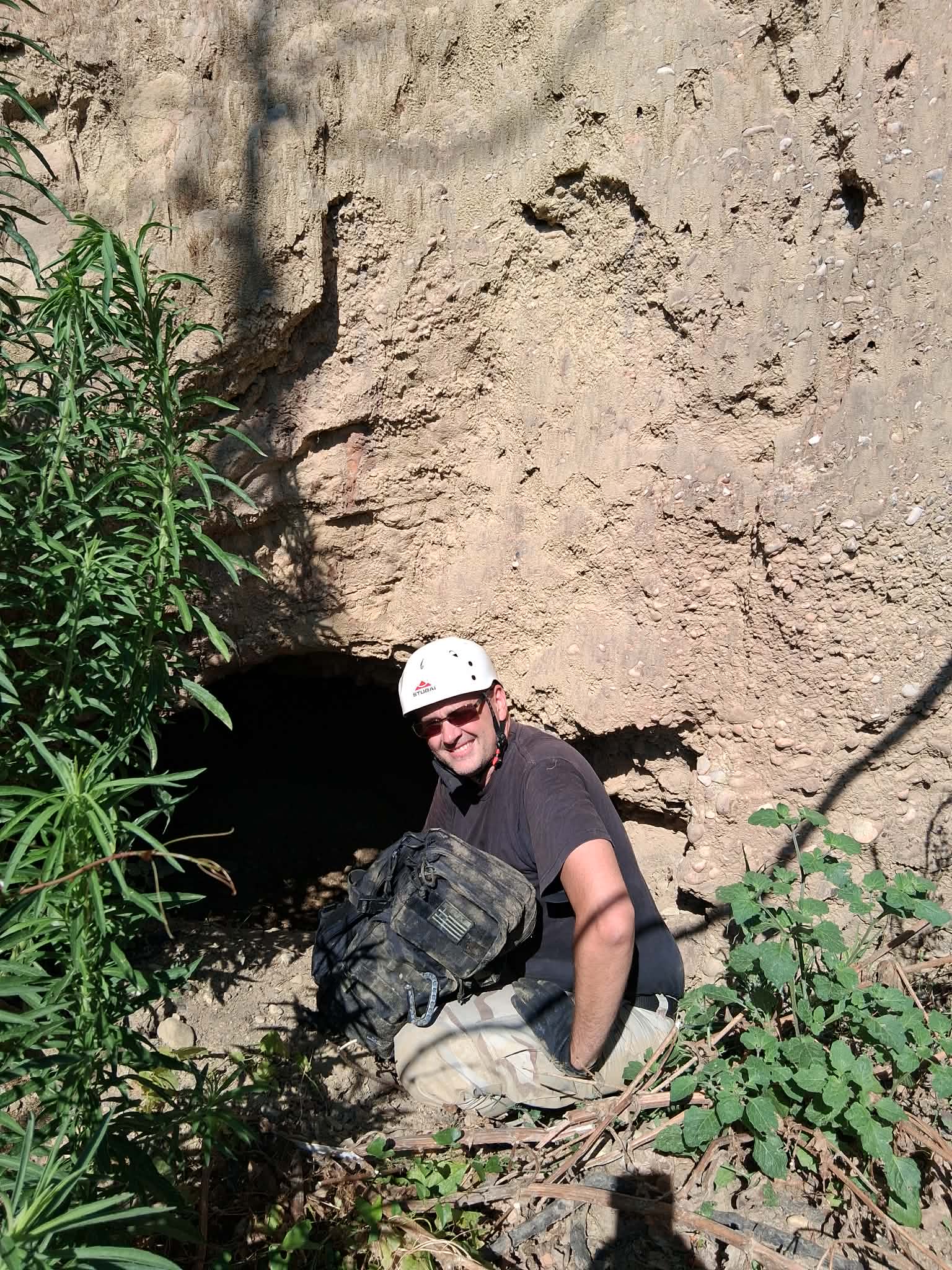
The moment of truth came with the exploration of the second structure. Access was difficult. A steep path led towards the small ravine, where two entrances were eventually identified in its walls. One was completely blocked. The other was accessible, but only by crawling. It was here that the mystery began to unravel. The much-publicised “more than 500 meters of tunnels” simply did not exist. The second structure was, in general terms, very similar to the first. Its layout, dimensions and construction method displayed significant similarities. It was not a vast underground complex, but another relatively small system of tunnels. Its state of preservation was, moreover, considerably worse than that of the first structure. Sections of the roof and walls had collapsed, making movement inside even more difficult. The reality was therefore far less spectacular than the original legend. But perhaps more interesting to the researcher.
From “Urban Legend” to the Archaeology of War
The field investigation at Theriano did not reveal a vast German underground complex. It did, however, reveal something equally useful: two small and relatively simple structures that form part of the broader military landscape of the occupation and had almost disappeared from collective memory. The two structures are not, in themselves, of particular fortification or architectural significance. Their construction is simple and their dimensions limited.
Their history, however, is characteristic. For decades they remained hidden beneath vegetation. The exact location of one of them was forgotten. A wildfire once again exposed the landscape and made its rediscovery possible. And a newspaper report, based on local information, was enough to create the image of a vast underground network. Ultimately, the “500 meters of tunnels” were not found. What was found, however, may be of greater importance to historical research: another small piece of the previously undocumented military landscape of the German occupation in Achaia. The case of Theriano serves as a reminder that underground installations dating from the Second World War continue, more than 85 years later, to lie hidden beneath the modern Greek countryside.
Along with them survive memories, oral testimonies and local legends that await investigation, verification and, ultimately, transformation into documented historical knowledge.
Notes
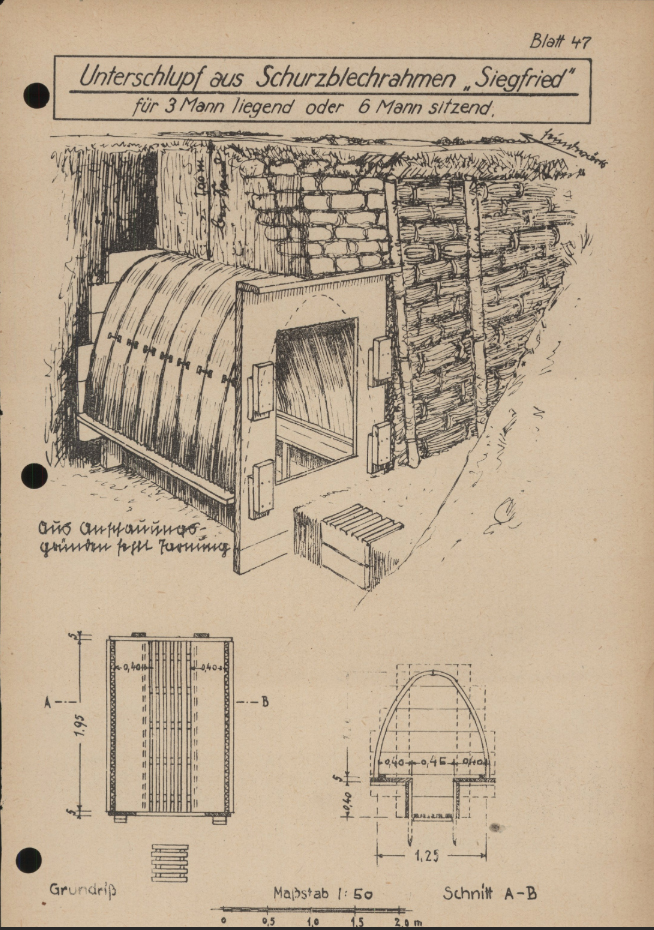
- According to Mr Nikolaos Gkountanis, the tunnels originally had substantial timber supports. The wooden beams were removed by local residents in the post-war period and reused in civilian construction.
- Lagekarte, der ital. Truppen und der, dem ital. VIII. A.K. unterstellten, deutschen Truppen. Stand 15.7.43.
Photographs: Giannis Arseniadis, Konstantinos Kyrimis.