

Then and Now: 1941-2018, WW2 in Crete, by Andreas Sfakianakis
Interviews, Then and Now, WW2, WW2 in GreeceBy Pierre Kosmidis
Then & Now photos by Andreas Sfakianakis
Back in May 1941, the German airborne operation, codenamed “Merkur” resulted in the conquest of the island of Crete, despite the heavy losses sustained by the fallschirmjager, which resulted in a Pyrrhic victory for the German invaders.
Over 7 decades later, Mr. Andreas Sfakianakis from Crete, has identified several locations in Crete, where bitter fighting took place and provides a candid look in the past.
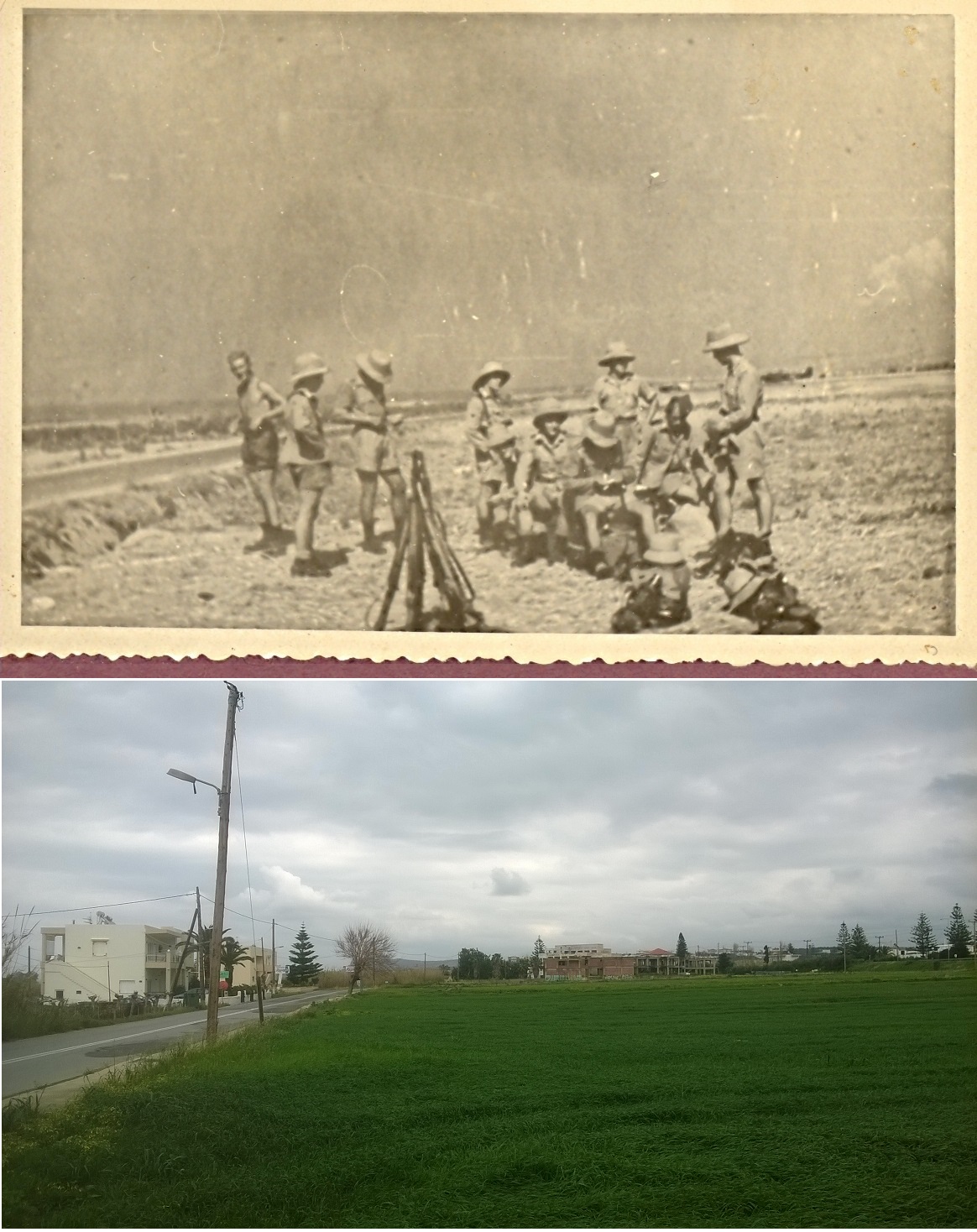
“The attack on Rethymnon, codenamed “Aris”, was undertaken by the 2nd Fallschirmjager Regiment. While the paratroopers expected to take the airfield easily, they were surprised by the stiff resistance, which caused heavy casualties” Mr. Andreas Sfakianakis says, adding: “In the top photograph we can see Germans after the battle for the airfield was over, possibly in in early June 1941, while at the bottom picture, we can see the exact spot as it is today”.
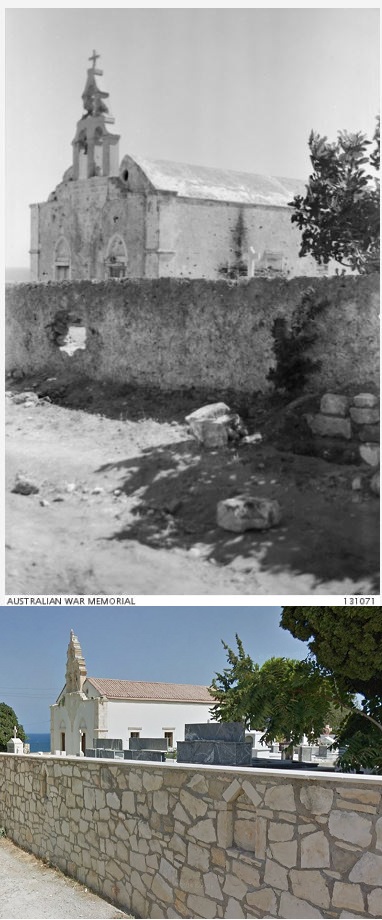
“The church of Agios Georgios (St. George) in Perivolia, Crete, remains virtually the same” Mr. Andreas Sfakianakis observes. “Dating back several centuries since it was first built, this church was a silent witness to the fierce fighting that took place in the area back in 1941”.

“Olive groves have gradually disappeared, as new houses in one of the most beautiful coastal spots in Crete are taking the place of the ancient trees”, Mr. Andreas Sfakianakis says. “Our view today from Hill D in Rethymnon, looking towards the east, is still reminiscent of the fateful days of 1941”.

“The Agia Prison, which still exists to this day, was a prominent building on the main road to Chania city. From Tuesday 20 May to Sunday 25 May 1941 the 3rd Fallschirmjagerregiment, used Agia Prison as their base, to attack the Allied forces in the surrounding area” Mr. Andreas Sfakianakis explains. “In the period photo, exhausted Germans rests on the very same steps of the prison’s main entrance. Today. those same 6 steps are there, reminding us of the turbulent times of 1941” .
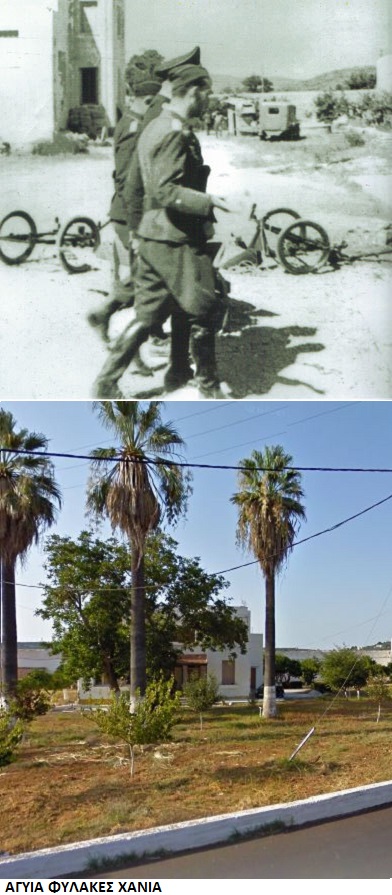
“Germans are walking by the Agia prison, shortly after the battle was over in 1941. The same building, as it is today, bears a striking resemblance” Mr. Andreas Sfakianakis notes.
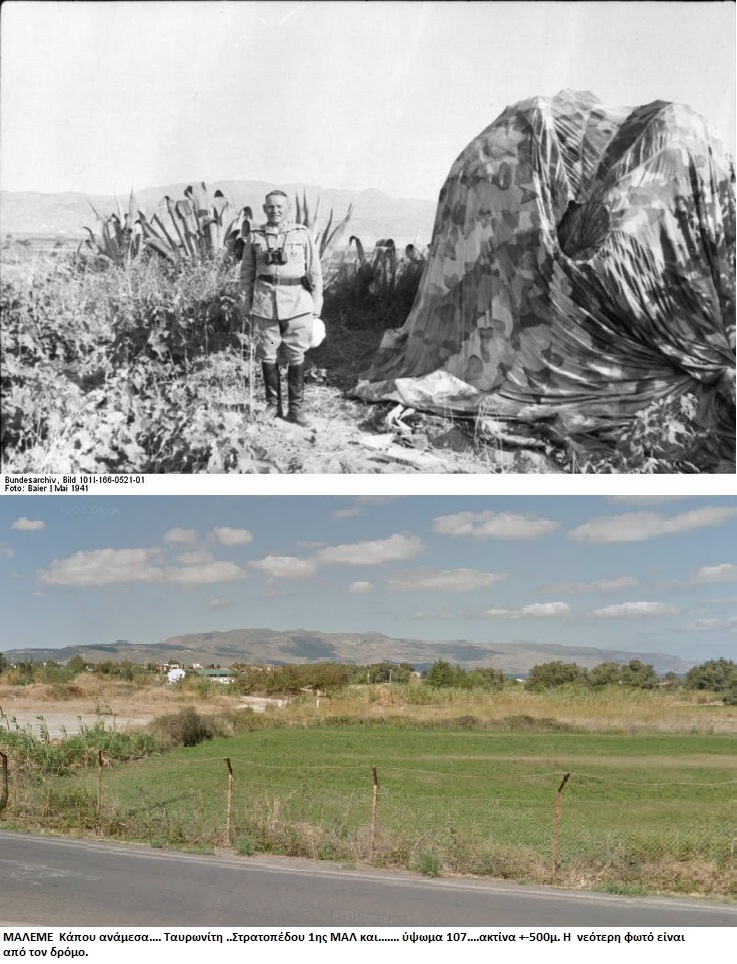
“General Ramcke is standing next to a parachute in May 1941. We stand at almost the same spot today, between Tavronitis river and Hill 107, the turning point of the Battle of Crete” Mr. Andreas Sfakianakis says to www.ww2wrecks.com

“The view from Hill A and the olive oil factory of Stavromenos is a testament of the development of the area. Formerly, only olive trees and vineyards dotted the landscape, today the same area is full with new buildings”. Mr. Andreas Sfakianakis says.
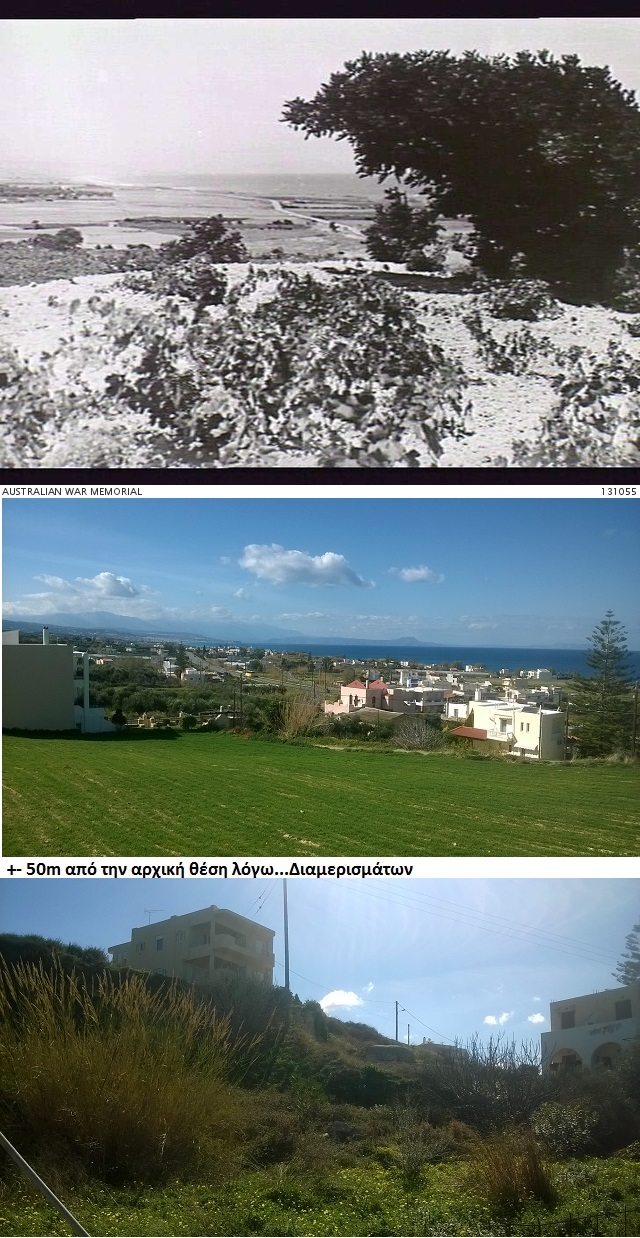
“We are almost at the same spot as in this period photo of 1941, as new houses are not allowing us to stand at the exact spot. This is the view of the Rethymno airfield, looking from Hill A, the position of the 2/11th Australian Battalion outside Estavromenos” Mr. Andreas Sfakianakis says.

“This small cottage, next to the Rehymno airfield still stands to this day, belongs to the Saounatsos family. The same spot as it was in 1941 and as it is today” says Mr. Andreas Sfakianakis