

Battlefield Archaeology: The abandoned WW2 German gun emplacements of Kolymbari, Crete
Bunker Archaeology, Interviews, WW2, WW2 in Greece, WW2 WrecksBy Pierre Kosmidis
Photos: Manolis Spanoudakis
Following the Battle of Crete in May 1941, the Germans occupied Crete, with the exception of the eastern part of the island, which was occupied by their Italian allies.

The Germans initiated a large fortification project, in order to turn the island of Crete into a “fortress”, due to its strategic location and importance, especially during the North Africa campaign.
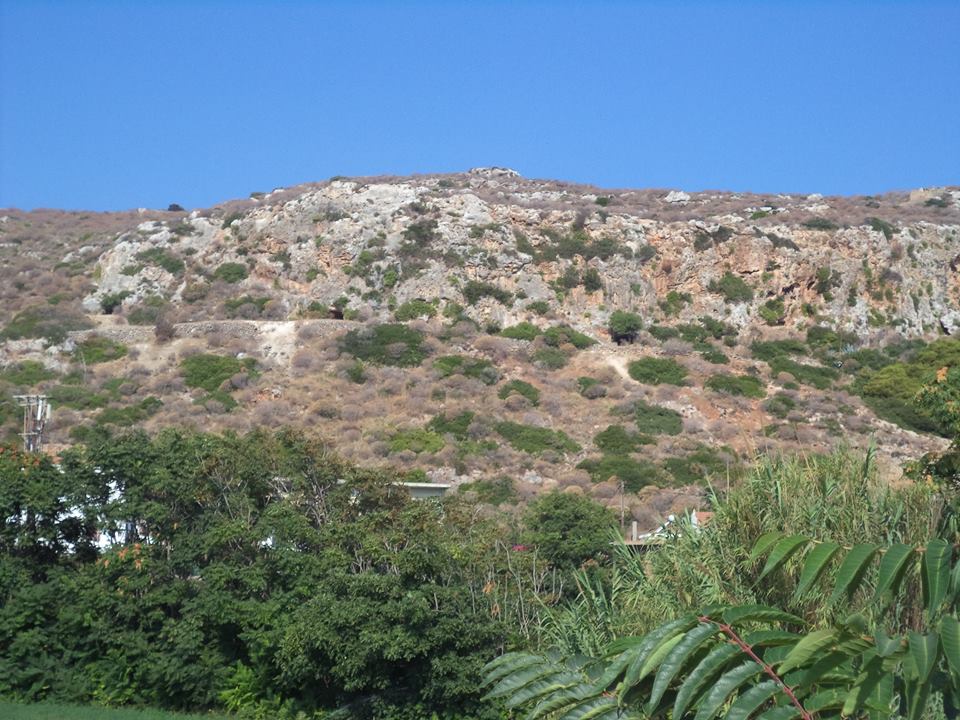
The occupation forces used forced labour to build a series of bunkers, underground ammunition dumps and surface fortifications, command and observation posts and went to such lengths as to even dig deep inside mountains in order to construct concealed gun emplacements.

Mr. Manolis Spanoudakis from Crete recently documented the gun emplacements in Kolymbari, in an area which overlooks the Maleme airfield, which was highly contested during the Battle of Crete.

The German Coastal Artillery Unit 834, equipped with 4 guns of 10.5 cm (105 mm), with a range of 12,000 metres, secured the area from Allied shipping and controlled the Maleme airfield.
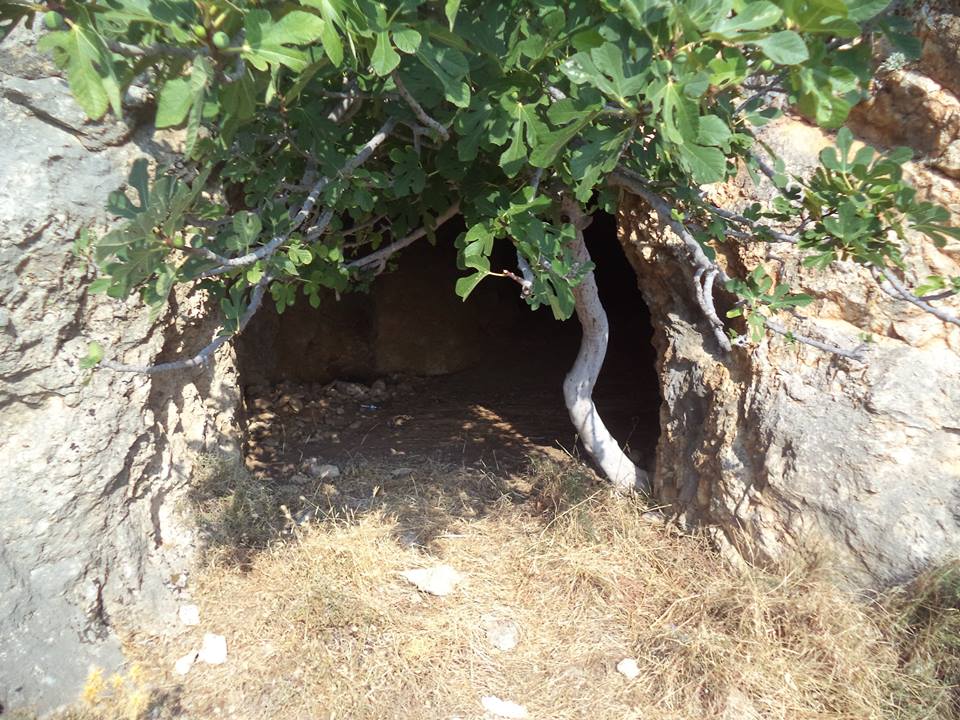
Officially designated as Canon de 105 mle 1913 Schneider, the German conquests of Poland, Belgium, France, and Yugoslavia during World War II gave them large numbers of captured 105 mm Schneider guns.

854 L 13 S’s were in service in France and a large number were captured. Many of these were installed in the Atlantic Wall system of coastal defenses.

German designations for these guns were as follows:
10.5 cm K 331(f) for guns captured from France
10.5 cm K 333(b) for guns captured from Belgium
10.5 cm K 338(i) for guns captured from Italy
10.5 cm K 338(j) for guns captured from Yugoslavia
10.5 cm K 13(p) and 10.5 cm K 29(p) for guns captured from Poland.

It is not clear whether the guns at Kolymbari were transported from France or from Yugoslavia, thus their designation would be K331 or K 338 respectively.

Mr. Manolis Spanoudakis shared his photos with www.ww2wrecks.com and noted the following:

“The purpose of the Kolymbari gun emplacements was to control the Maleme airfield, since it was the most suitable position in the area, overlooking Maleme airfield, the villages of the plain with an unobstructed view to the sea. Built by the Germans after the capture of Crete in May 1941, these gun emplacements were manned until August 1944, when the German forces retreated to the city of Chania.”

Mr. Spanoudakis added:
These caves were dug in the limestone rock that by forced labour, but unfortunately all have now passed away and we cannot get any first-hand account of the construction.

In my opinion, the local municipality should have turned the site into a monument of our local history. The path leading to the gun emplacements should have been opened,cleared and connected to the main road of the village.

The gun emplacements, offering a spectacular view to the surrounding area, could become an attraction for local and international tourists, but unfortunately nothing has been done to date and the local authorities are indifferent.