
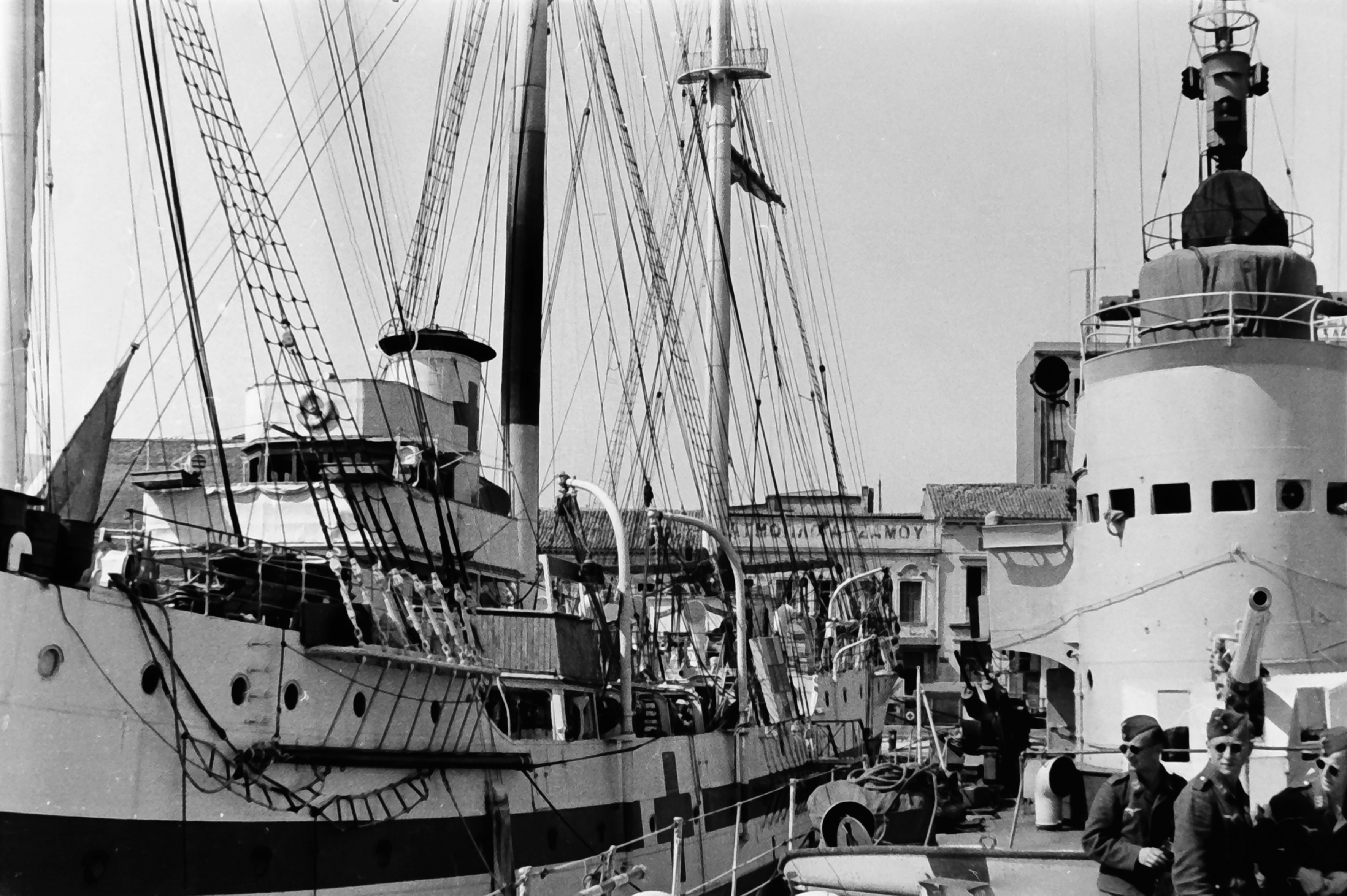
The hospital ship Graz/Aris, by Vincenzo Giacomo Toccafondi
Shipwrecks, WW2 in Greece, WW2 WrecksBy Vincenzo Giacomo Toccafondi
I found a very interesting image on a German auction site depicting the hospital ship Graz, the former Greek vessel Aris, moored alongside an Italian Spica-class torpedo boat of the Alcione type, likely the Lupo. The photo may have been taken in Piraeus in 1942.
The Italian torpedo boat is hosting a group of visiting German airmen. The bow gun is the standard 100/47 OTO Model 1937; just behind the bridge, we can see a twin 20 mm machine gun mount. These weapons were installed in 1941 to replace the less effective 13.2 mm machine guns.
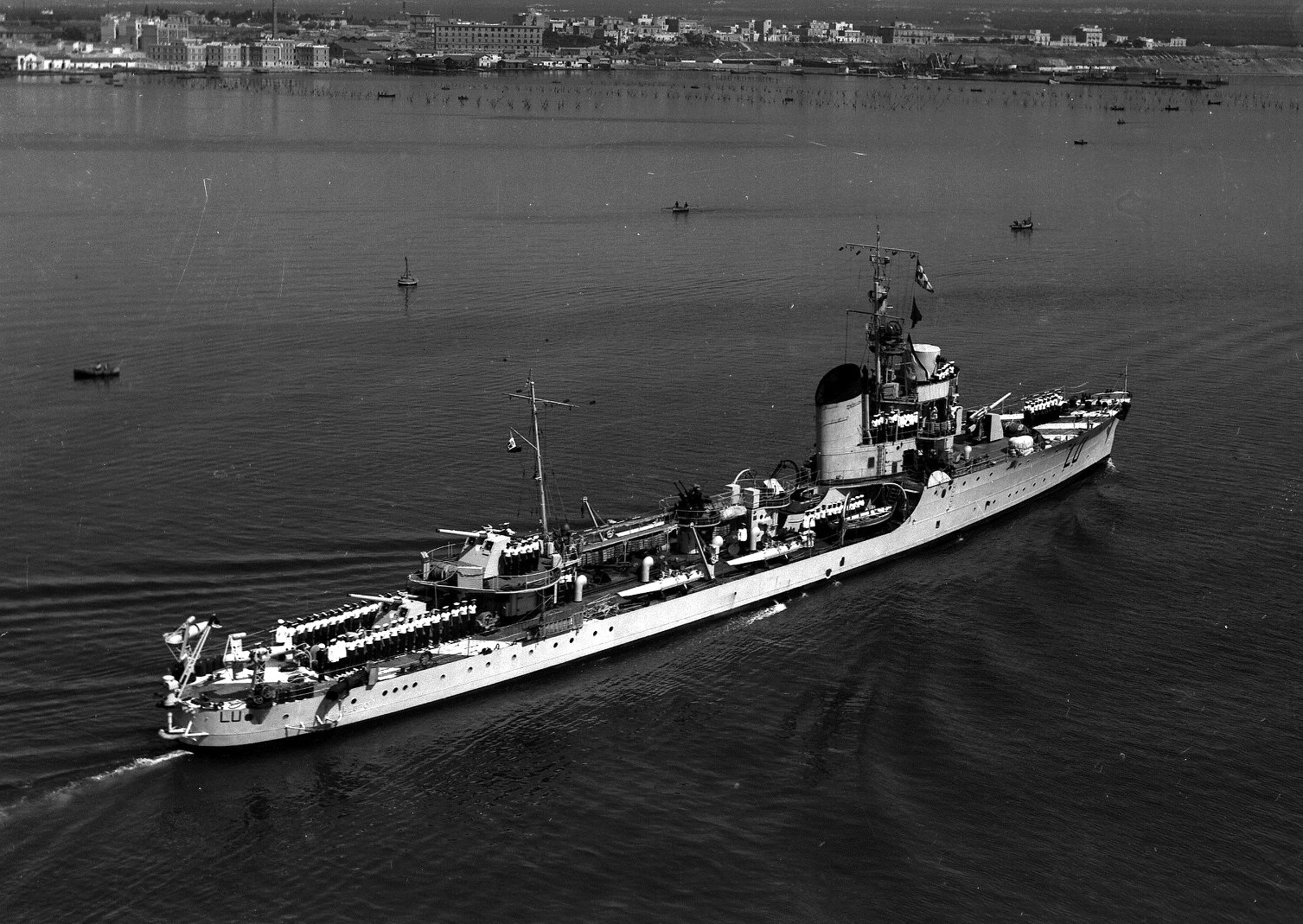
The hospital ship Graz/Aris is truly beautiful and displays the markings prescribed by the Geneva Convention. However, mooring near military units exposes it to enemy air attacks, illustrating a broader issue faced by hospital ships during wartime.
This challenge of safety was already recognised by the Medical Director of the Nave Arno. Colonel Talarico, for example, noted that severe damage to the hospital ship Arno on the night of December 8, 1940, during a British bombing raid on Naples, resulted from the port hosting military, merchant, and neutral vessels. The ship’s lights had been turned off by order of the Naval Command.
A similar incident occurred with the hospital ship Po. Upon arriving in Vlorë on March 14, 1941, the ship received orders from the Navy Command to moor in the roadstead with its lights out. That night, the ship was struck by British torpedo bombers and sank.
On the night of August 10–11, 1941, the hospital ship California was moored in Syracuse. The mooring site in Syracuse had already been contested by Colonel Talarico, who had contacted the Navy Command in Augusta to no avail. California was blacked out per Navy Command orders and thus lacked the light signals that guaranteed its immunity. It was torpedoed and sank.
Securing separate ports was a major logistical challenge, but the losses incurred were truly significant.
The beautiful Graz/Aris did not encounter similar problems. Unfortunately, on December 5, 1942, the ship struck a mine near Bizerte, close to the Island of Cani, and sank. Fifty-three people lost their lives in the sinking, most of them Greek sailors.
Bibliography
Achille Talarico – Scoglio e Marosi. Ricordi di un chirurgo soldato e marinaio d’Italia (1915-1945)
Volker Hartmann, Hartmut Nöldeke Verwundetentransportüber See Deutsche Lazarett- und VerwundetentransportschiffeimZweitenWeltkrieg Verlag Dott.DieterWinkler
Vincenzo Giacomo Toccafondi – Storia di una nave bianca – Amazon KDP