
 |
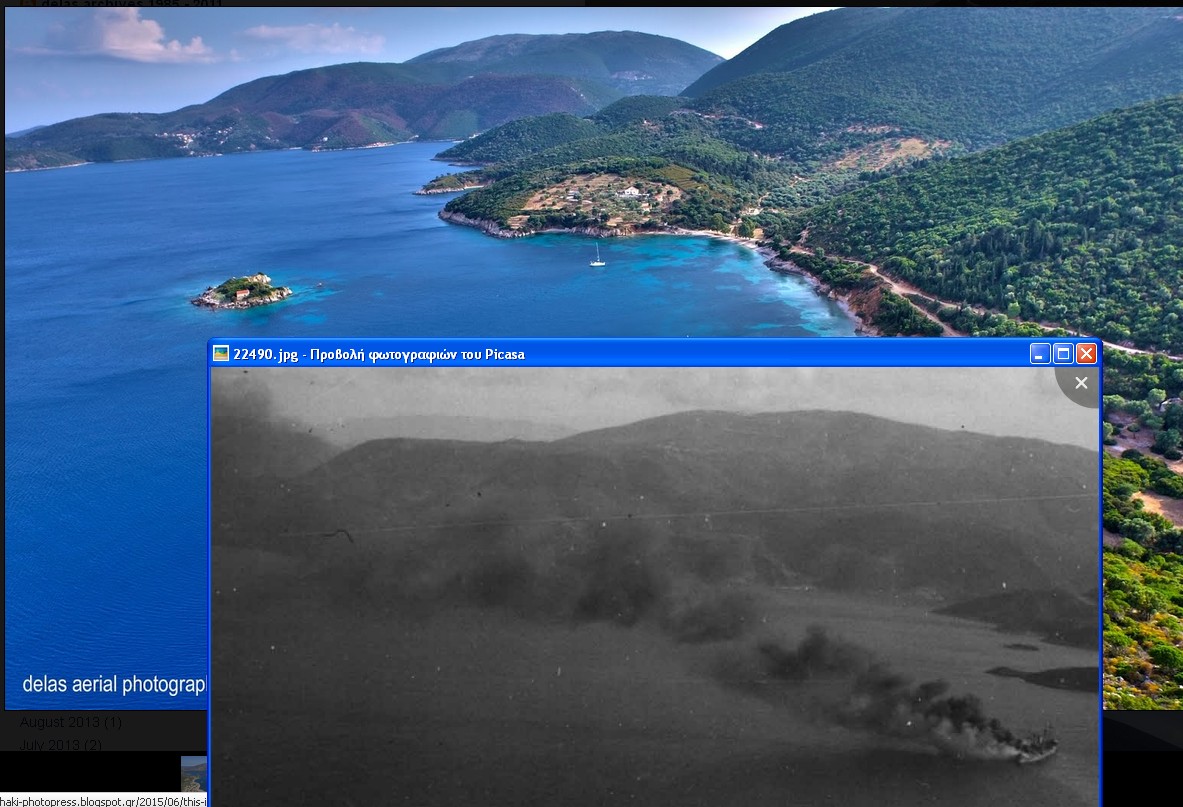
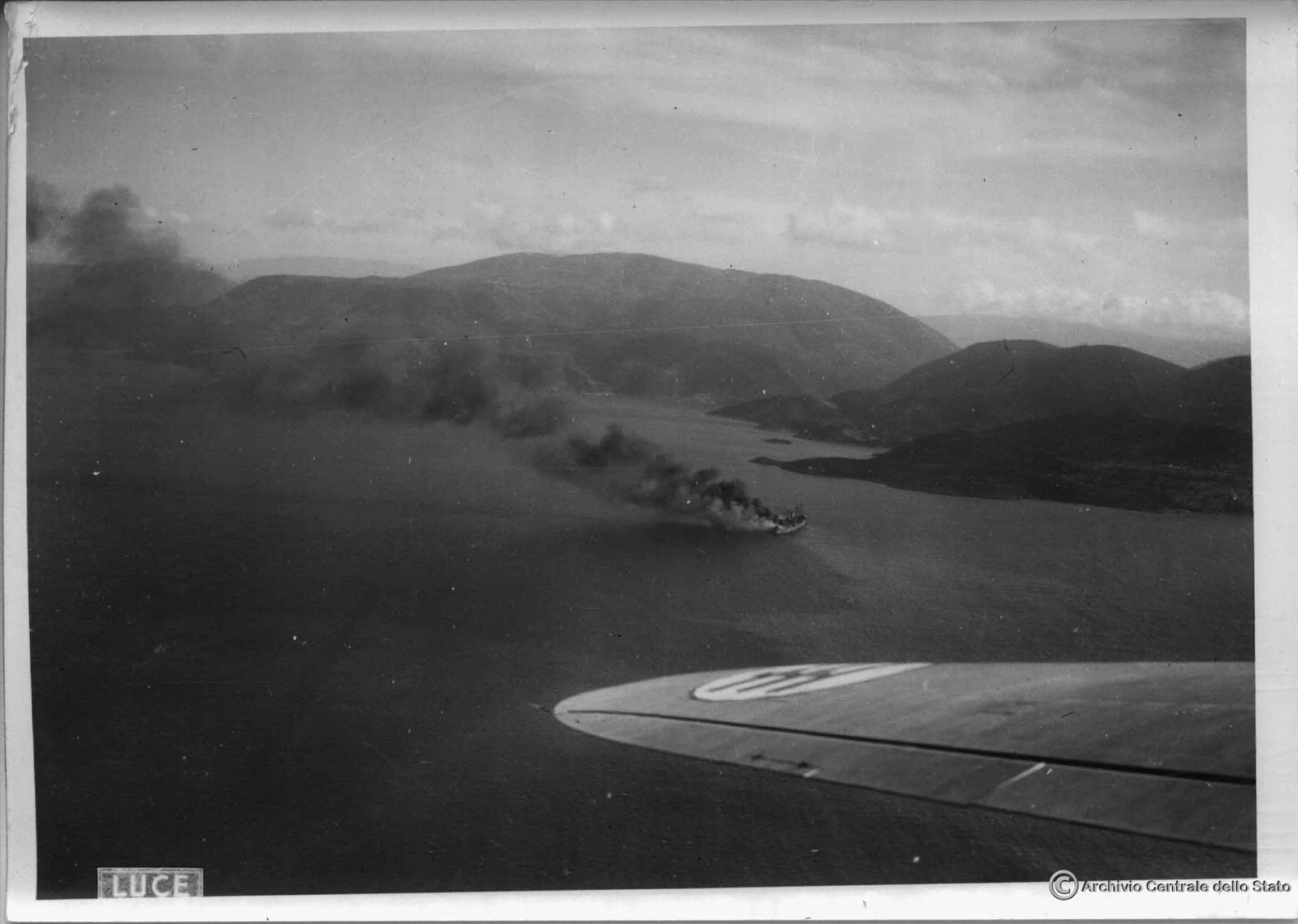
| The photo of the Italian Archivio Centrale Dello Stato files, reason for the investigation of the ship’s identity – Photo Credit: LUCE/George Karelas |
Research: George Karelas and Gerasimos Sotiropoulos
Photos: As credited
Text: Pierre Kosmidis
By May 21st, 1941 the Germans had concluded the invasion of mainland Greece, codenamed “Operation Marita” and were in the process of attacking the island of Crete, with an airborne assault that was initiated the day before, on May 20th, codenamed “Operation Merkur”.
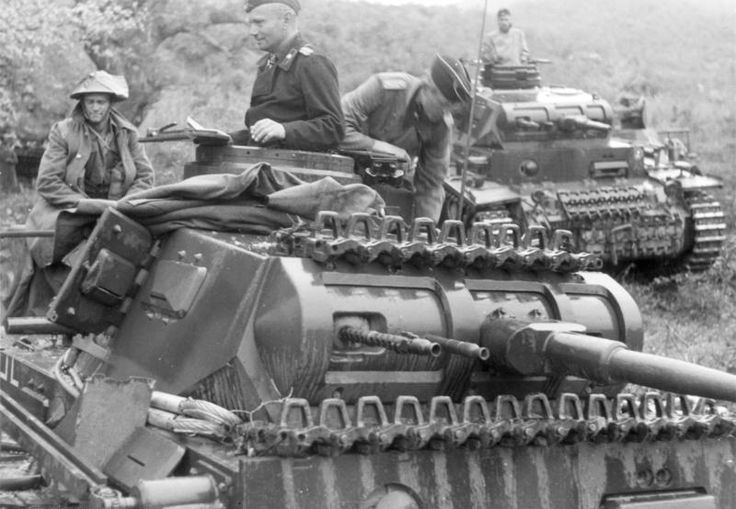 |
| An Allied POW sitting atop a German tank, during “Operation Marita”, the invasion of Greece, April-May 1941 Photo Credit: Bundesarchiv |
The German armored divisions that participated in the “blitzkrieg” against Greece, were now needed in the Easter Front, as Germany was gearing up for the invasion of the Soviet Union and rather from taking the long way to the front via land, they chose the much quicker way:
 |
| German armour (actually French Hotchkiss tanks) during the invasion of Yugoslavia and Greece, April-May 1941 |
To ferry them from the port of Patras, Greece across the Adriatic Sea to the port of Taranto, back to Italy.
Therefore, a large contingent of the 2nd Panzer Division was loaded in the port of Patras aboard the transport ships Marburg and Kybfels, with final destination the port of Taranto in Italy.
This was a decision that would cost the Germans dearly.
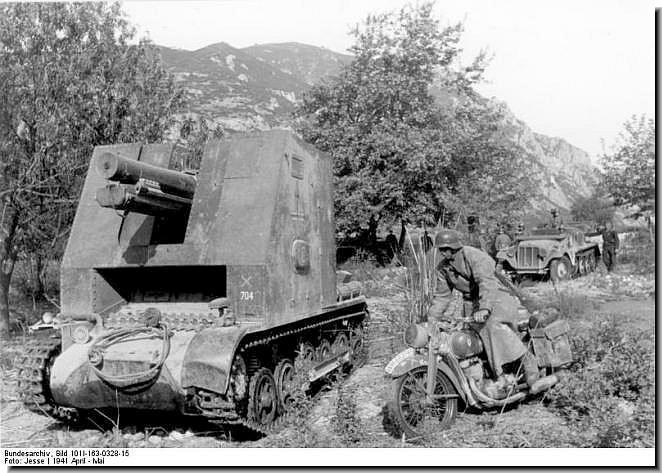 |
| A German self-propelled gun used during the invasion of Greece, Source: Bundesarchiv |
Kybfels was a cargo ship of 7,764 tons owned by HANSA Bremen.
Marburg, just below 7,564 tons, was built in 1928 for the company North German LLoyd.
A previous convoy on May 18, 1941, including those two ships and the Italian transport ship Laura C. transferred via the same route, from Patras to Taranto, heavy guns and tanks of the 2nd Panzer Division and then returned to Patras to load the remaining tanks, as well as other vehicles and personnel of the Division.
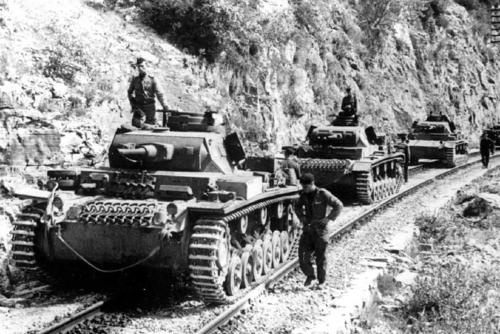 |
| The poor road network of Greece, along with the fact that many roads were destroyed by retreating British forces, made the German tanks use the rail tracks to continue their advance. Source: Bundesarchiv |
With the fear of an attack and following reports that an allied submarine had been seen in the area, the Italian Navy, the Regia Marina, sent the submarine Menotti commanded by lieutenant commander Ugo Gelli, to patrol the area south of Zakynthos (Zante) island.
 |
| Another photo of the Italian Archivio Centrale Dello Stato files, reason for the investigation of the ship’s identity – Photo Credit: LUCE/George Karelas |
The submarine sailed from Taranto on May 18 and on the evening of the 20th the Italians saw a silhouette of an unknown ship in the area.
It later proved to be the mine layer HMS Abdiel, which set the minefield that would make so much damage to the Axis powers.
Shortly afterwards, the Italian destroyer Carlo Mirabello, coming from Italy to Patras, hit a mine and sunk.
 |
| Marburg with her first name Saale (source http://www.nils-seefahrt.de/) |
The Italian gunboat Pellegrino Matteucci followed, while accompanying an Italian convoy.
The most probable reason as to why the Italians did not warn their German allies of the minefield that sank their ships is the following:
During that time, their relations went sour, the cooperation between the fascists and the nazis in Patras was strained and consultation between each other was virtually non-existent.
The chronicle of the disaster
On May 21st, 1941, at 9:00 hrs. in the morning, Kybfels and Marburg are being loaded with vehicles and artillery of the 2nd Armoured Division, with the port of Taranto as their destination.
From Italy, they will be carried by rail to the Eastern Front, for Operation “Barbarossa”.
 |
| German survivors watch the Marburg, while the ship is seen drifting towards the shores of Ithaki. Source: A. Winkel) |
This time, the two ships will be on their own, apart from Italian reconnaissance aircraft that will fly over them.
At 14:00 hrs. while the convoy was between Kefalonia and Lefkada islands, a terrible explosion was heard.
Kybfels had struck a mine!
Shortly afterwards Marburg hits a mine too and starts to sink!
The minefield was set just on the day before by the British mine layer HMS Abdiel, between Kefalonia and Ithaki islands.
The exact location of this minefield, in a busy route the Axis shipping was frequently using cannot be attributed just to luck.
It appears that the British had a very well organised intelligence service in Patras that monitored all the moves of the Axis shipping.
 |
| The ship at the port of Patras before the last or the penultimate voyage. Source: Deutsches Historisches Museum |
In the book of Kostas Triantafillou “Historical Dictionary of Patras” it is documented that two Greeks, Martakos and Skamnakis, were arrested “due to suspicion of reporting the movements of ships to the enemy” (i.e. the British)
226 Germans were killed or drowned with the two ships, while survivors swam to Lefkada and Kefalonia islands.
HMS Abdiel went down in history as the first mining operation in very deep waters, which surprised the Axis powers in the Mediterranean.